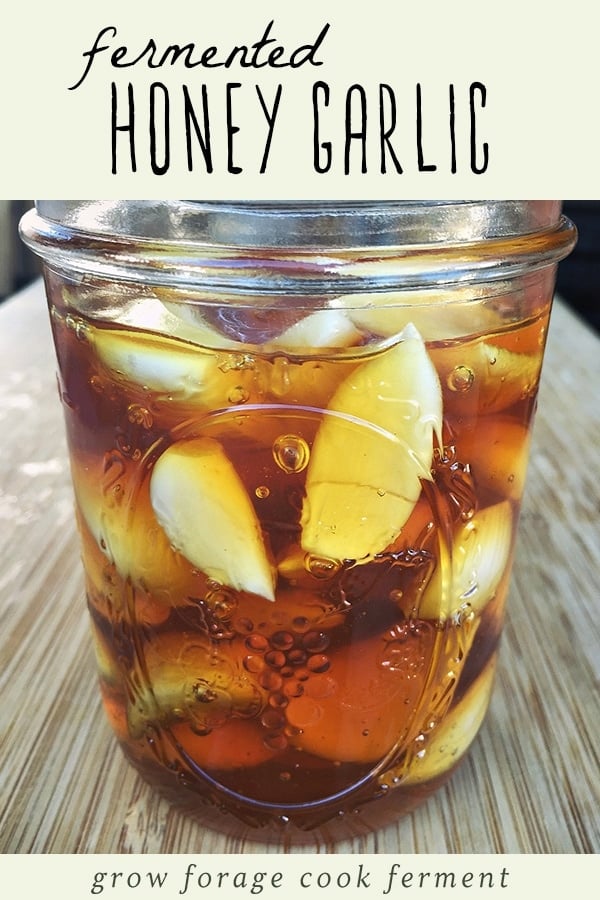
This fermented honey garlic is the perfect thing to make to boost your immune system! Both honey and garlic have strong medicinal benefits, so you’ll want to have this delicious home remedy on hand for cold and flu season.
Want to save this post for later?
Fermenting Garlic in Honey
I’m really excited to share this post with you! Fermented honey garlic is something I’ve been wanting to try for a very long time.
I usually reserve my honey for mead making, but using it for other ferments intrigued me. Don’t ask me why I haven’t done it until now, because it’s the easiest thing in the world!
This tasty fermented garlic in honey can be used for many things, as good food and good medicine. Honestly though, I like to just eat it as is!
Fermented Honey Garlic Recipe
Making fermented honey garlic is so easy, it hardly needs a recipe!
Prepare the Garlic
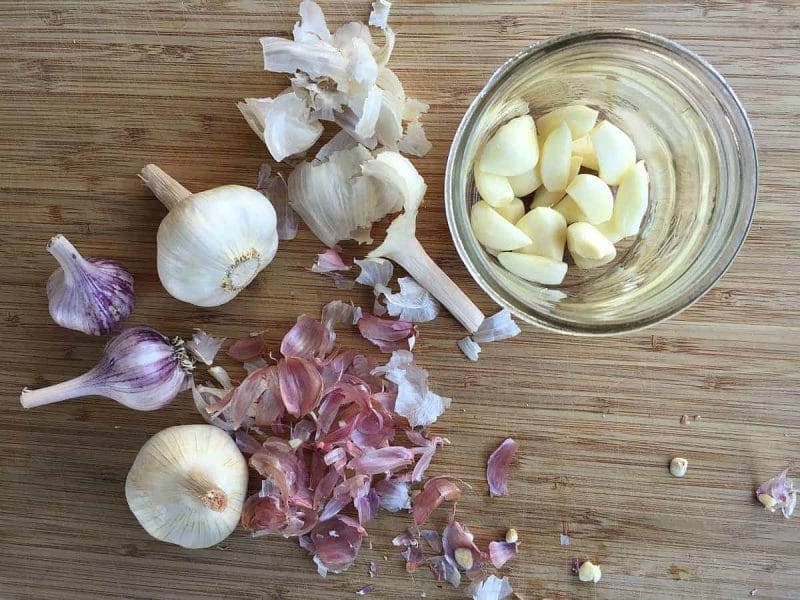
The hardest and most time consuming part is prepping all of the garlic. Whatever size jar you use, you’ll want to fill it about 1/2-3/4 full of peeled garlic.
The quickest and easiest way to prep garlic is to place the side of a chef’s knife on top of a single clove and then give it a firm whack with the palm of your hand.
Don’t do it too hard, as you don’t want to crush the garlic, but just enough to lightly bruise the it. This will make it easy to peel, and will also release a bit of the garlic juice.
Add the Honey
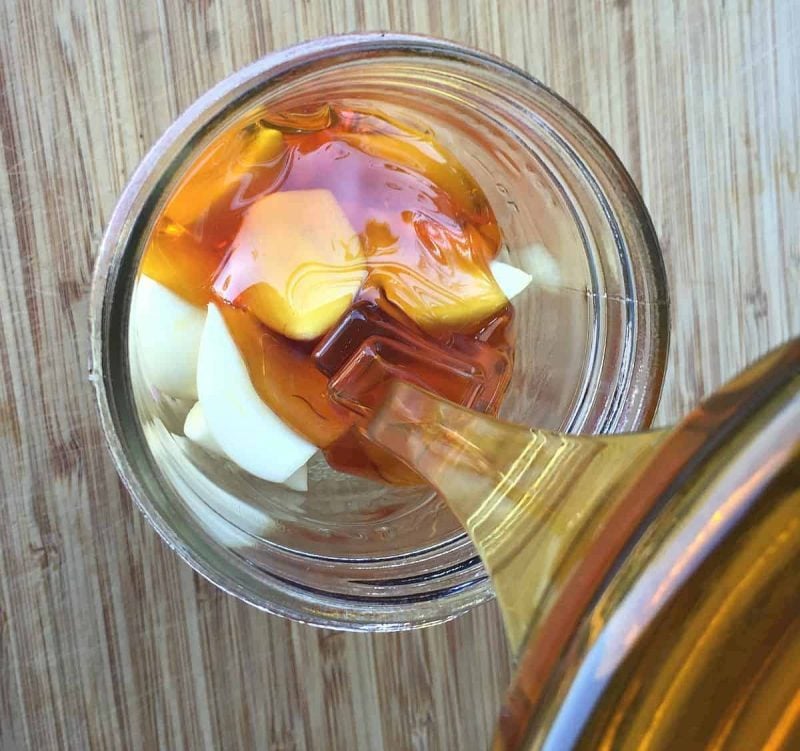
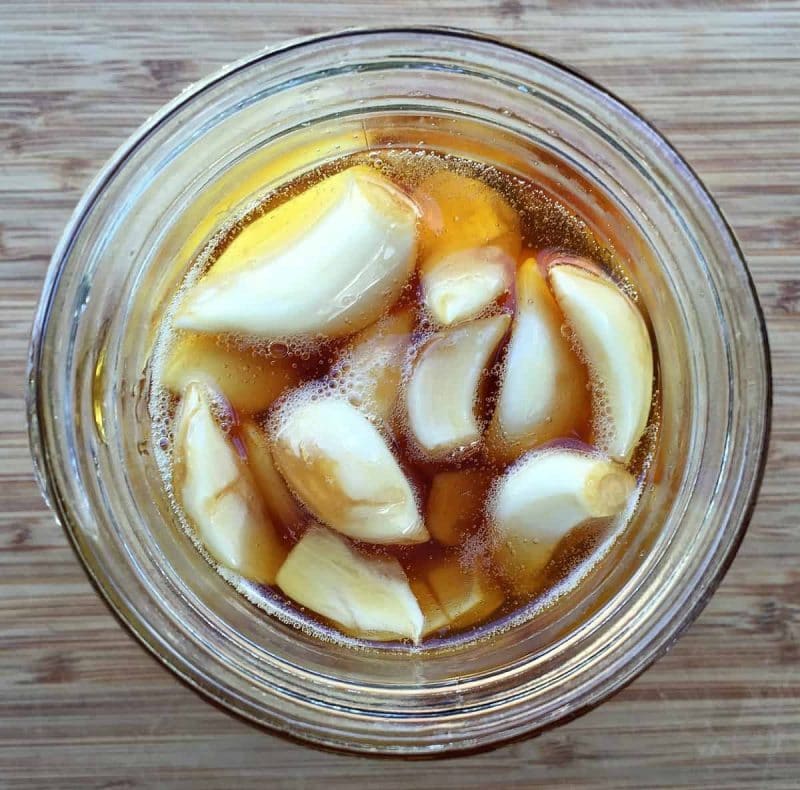
Once you have enough garlic in your jar, pour in some raw honey to cover it. The garlic will probably float a bit and that’s ok.
It’s important to use raw honey to make fermented garlic in honey, as it will still have all the bacteria and wild yeast that is necessary for fermentation.
When liquid is added to honey, it jump starts the fermentation process. The small amount of juice from the garlic will create just enough liquid for fermentation to happen.
Cover and Flip
Cover the jar loosely with a lid to let the gasses escape, and put it in a dark place to ferment.
It’s a good idea to put a plate or something similar underneath the jar as it’s fermenting, as it will likely bubble up a bit and a little honey could possibly drip out.
It’s also important to gently turn the jar over every day or so, or whenever you think about it, to make sure that all of the garlic stay coated with honey.
Screw the lid on tightly before you do this! Then return it to it’s upright position and re-loosen the lid.
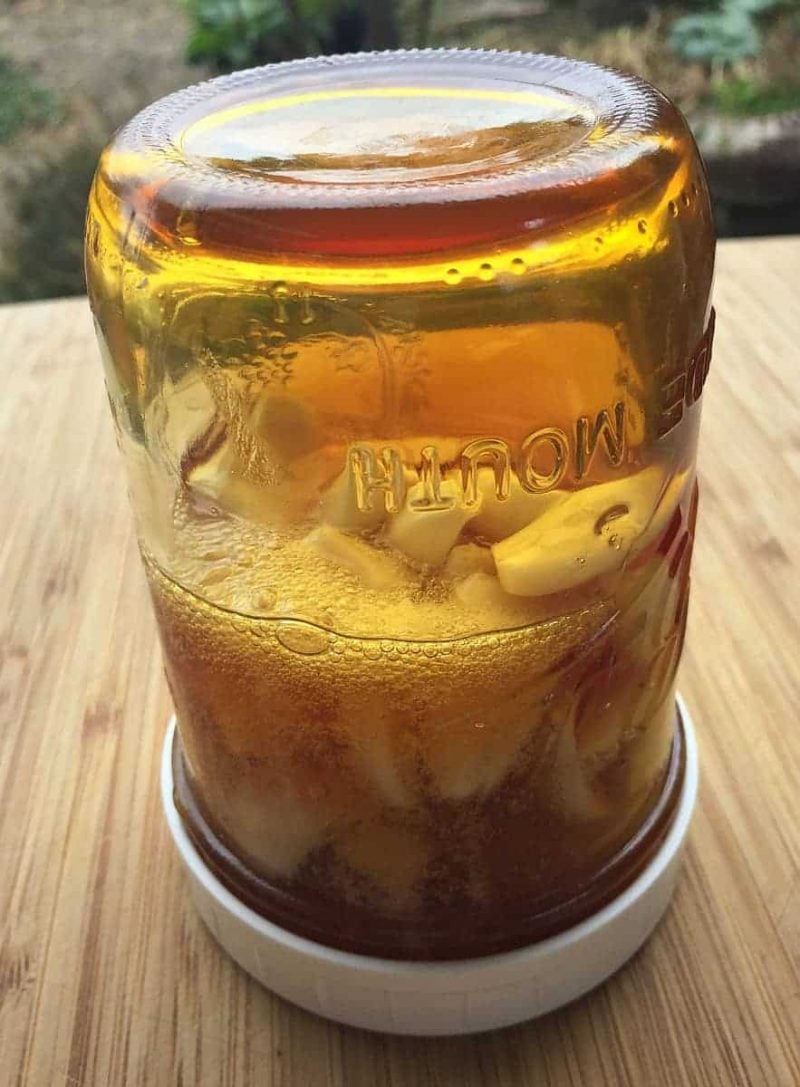
In a few days to a week you will notice some bubbles forming on the surface of the honey. Hooray!
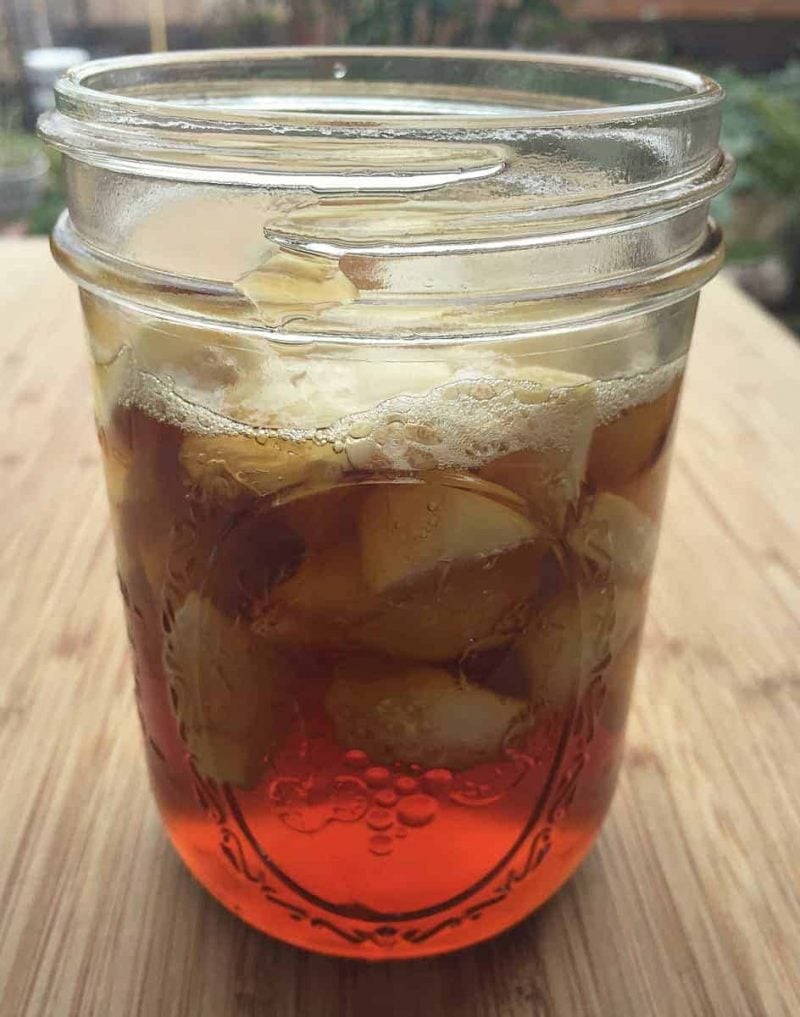
The honey garlic will ferment for about a month, but you can eat it at any time during the process.
The flavor will continue to develop over time, the garlic will mellow, and the honey will become much runnier.
Occasionally the garlic cloves turn a blue or green color due to a reaction during the fermentation process. While it may be a bit alarming, it is not harmful and the honey garlic can still be used.
Honey garlic will store well in a cool place for many months, or even a year or longer! I’ve kept some for over two years and it is still good.
Using Fermented Honey Garlic
Now, how do you use this fermented honey garlic? That’s a good question, and it can be used in a variety of ways.
Both garlic and honey have strong medicinal properties, so it makes sense to use it as an immune booster or if you feel a cold or flu coming on.
Pop a whole garlic clove, or take a spoonful of honey (or both!).
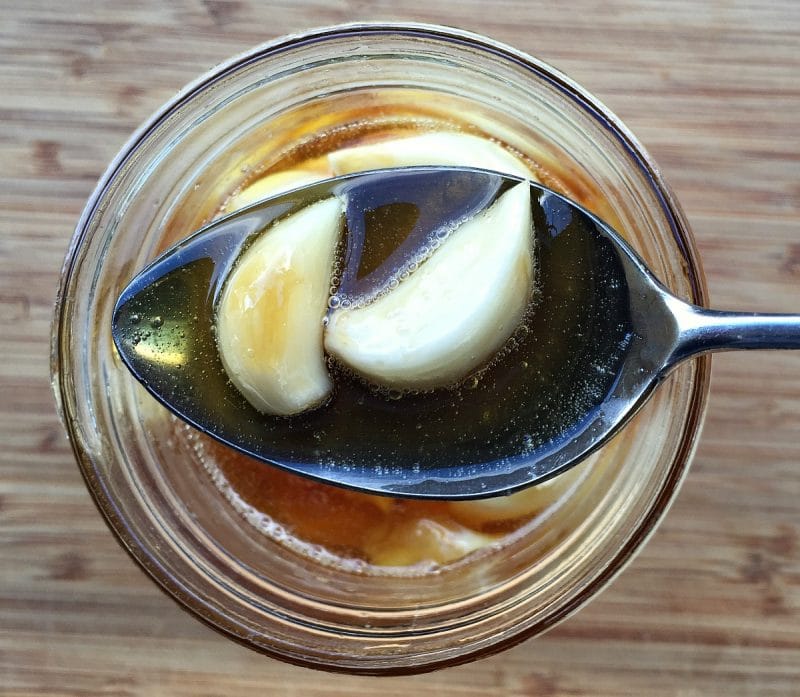
As you can probably imagine, honey garlic also makes a wonderful food!
It’s a natural in marinades and sauces, and would make a really tasty glaze for meats or veggies. Basically anything where you would normally use honey and garlic together!
Is Botulism a Concern in Honey Garlic?
I get this question a lot about fermented honey garlic! The short answer is no, botulism is really not a concern in this type of ferment.
While botulism can happen in garlic and oil preparations without added acidity, the fermentation process that happens here makes it very unlikely.
Raw honey is acidic, and while it can carry botulism spores (which is why it is not recommended for babies under 1 year), the level of acidity stops them from reproducing, which is what causes botulism.
If you are concerned about it, use a pH test strip. Botulism spores can’t reproduce with a pH of less than 4.6. Honey is usually around 3.9, but that can vary between brands.
If the pH is too high, add a splash of raw apple cider vinegar to add more acidity and retest. This is generally not needed, but I did want to mention it.
Honey garlic should not be given to babies under one year of age.
I really hope you make this yummy honeyed garlic! It’s super easy, and great to have on hand. I have a feeling it’s going to become a staple in our house!
Have you ever made fermented honey garlic? How do you use it?
More Fermented and Infused Honey Recipes
Enjoy these other recipes that showcase fermented and infused honey!
- Fermented Honey Cranberries
- Fermented Elderberry Honey
- Herbal Infused Honey
- Lilac Flower Infused Honey
Fermented Honey Garlic
Equipment
Ingredients
- 1 cup whole garlic cloves peeled and slightly crushed
- 1 cup raw honey or more, as needed to cover garlic
Instructions
- Place the peeled garlic cloves into a wide-mouth pint sized mason jar. Add enough honey to completely cover the garlic cloves. Make sure they are coated with honey.
- Place the lid on the jar loosely, then tuck into a dark place.
- Every day or so, tighten the lid on the jar and flip it upside down to coat the garlic cloves with honey. Loosen the lid again when you return it to the upright position.
- Within a few days to a week, you should see small bubbles start to form on the surface of the honey.
- The honey garlic will ferment for about a month, but you can eat it at any time. The flavor will continue to develop over time, the garlic will mellow, and the honey will become much runnier.
- Store in a cool place for many months or even a year, if not longer.
Notes
- It’s important to use raw honey for this recipe, as it has all of the bacteria and wild yeast that is necessary for fermentation.
- The small amount of juice from the garlic will create just enough liquid for fermentation to happen.
- It’s a good idea to put a plate underneath the jar during fermentation, as it will likely bubble up and a little bit of honey could possibly drip out.
- Occasionally the garlic cloves turn a bluish or greenish color during the fermentation process. While it may be a bit alarming, it is not harmful and the honey garlic can still be used.
- If you are concerned about botulism, use a pH test strip. Botulism spores can't reproduce with a pH of less than 4.6. Honey is usually around 3.9, but that can vary between brands.
- If the pH is too high, add a splash of raw apple cider vinegar to add more acidity and retest. This is generally not needed, but I do want to mention it.
- Honey garlic should not be given to babies under one year of age.

My granddaughter helped me make this and she smashed the garlic quite a bit. Will that make a difference?
Nope! Should still work totally fine.
Hi, my granddaughter helped me make mine and she smashed the garlic pretty good. Is that a bad thing?
I peeled a lot of garlic n I poured honey over it in a clear mason jar but the honey I have was raw n it seemed very pure it wasn’t hard but it’s clumpy like the jar of honey I have when I turned the jar of honey up side down it didn’t move so I put like a teaspoon to a tablespoon spoon of bottled water in with honey n the garlic just to make it move it little bit easier to cover the garlic my concern is the botulism it won’t form botulism in the jar with the honey n garlic will it? I read the article that u posted I took a spoonful of it today n im good so far lol im just worried that the longer it sits it’s gonna form the botulism in there cuz I put the little water in it I know I shouldn’t of did it but I want to make the honey move it around the garlic a little bit better thank you for you posting it
Hi Mary. A small amount of water doesn’t automatically mean botulism will form…but it can lower the acidity and increase the risk compared to a garlic honey ferment without the added water. If you’re concerned, I would keep it refrigerated and watch for any signs of spoilage, and in the future I’d avoid adding water and simply give the jar time, as the garlic will release moisture into the honey that will thin it over time.
Hi, I’m really glad I found this site. I’m on day 5 of the ferment and yesterday noticed some blue/green discolouration on some of the cloves. I was about to throw it but decided I’d do a search first to see if it was a common problem. So glad I did. Thanks for all your great info here, it’s really made a difference.
Hi,
My honey is firm, can I heat it gently (below 40 c) to liquify it?
Thank you
You can gently warm water in a pot and soak your jar in it. The water should not be hot.
My garlic has been fermenting for almost a month now. I added some apple cider vinegar in the beginning because I was worried about botulism, but when I test the PH it was 4.75. Should I throw it out?
I did the fermented garlic. Everything looks great but I’m terrified of botulism. I flipped and burped daily. What should I look out for to prevent botulism?
Botulism is really not a concern in this type of ferment. Did you read the section on botulism in this recipe?
Did you literally not read the entire section in this recipe about botulism??
I’m obsessed with fermenting garlic now thanks to your post! I was wondering if I can add more honey to it after some of my jars have been fermenting since
3/4/26. Today is 3/18/26. The last batch I made within a week or so the garlic didn’t have that garlic bite to it. I’ve increased the jar size and the garlic is still a bit spicy.
It’s best practice to always start a new jar to prevent the risk of cross-contamination.
My honey looks cloudy but smells and tastes fine. It didn’t seem to ferment as well as I would have thought it should. One bulb, raw honey, turned and burped, 30 days. I’m thinking the honey will naturally get cloudy? Thanks.
Hi Gene. Yes, the honey can naturally become cloudy based on the type of honey itself and whether or not it was filtered.
We have been having the honey daily to ward off colds and now it’s almost all garlic left. Can I add more honey or just start all over again??
It’s best to consume the entire jar, cloves and all before making a new one to prevent cross contamination. If you want, you could throw the cloves in a food processor and make a quick condiment for roasted veggies or bread.
Hi there. Thanks for this recipe. Like another poster on here, i used garlic that had just started sprouting. After adding the honey, they seem to float and sit above the honey..no matter how often i turn it upside down, they still sit above it….is that normal? Or will it be better to start again? Thanks
It’s normal. The flipping is for coating the cloves in honey. As long as they still have honey coating them, even above the surface of the honey, they’ll stay preserved.
Hi there, I made a batch of this yesterday but used a bag of peeled garlic purchased from the store, and now as I re read the recipe I’m not sure if it was organic or not… Will the recipe still work? What should I do? I don’t want it to go to waste.
It may or it may not. Some people have said that they have successfully fermented non-organic garlic, but I’ve only used organic.
I put garlic in normal supermarket honey. Should I bin it ?
That’s totally up to you. The worst that could happen is that it doesn’t ferment and you have garlic infused honey, which is still usable and delicious.
I made my garlic/ginger honey on 11/25/26 with an airlock lid stored in a paper bag on my counter. Today is 1/22/26 I just tested with ph strip and it was a dark green. I added AVC. Should I dump the jar and try again?
Hi Annie. It’s completely for normal for garlic to turn green when it interacts with vinegar. It is most likely fine.
I’m sorry I meant the ph strip was dark green so the ph in the jar was over a 6.0 The garlic never changed color
Hi my garlic has a few green sprouts coming out is it ok to cut them off and still use for this ? Or should I use not sprouting garlic. They only like 1/8 inch
It’s best to only use fresh because the moisture in the garlic is what causes fermentation. Sprouted garlic tends to be very dry.
Can I please ask, I get honey from my local beekeeper but sometimes it solidifies and I have to warm it to make it runny again but your recipe says not to use honey thats been warmed so I don’t know what to do now?
As long it’s warmed at a very low heat (less than 105 degrees) it will still have its beneficial enzymes intact. I like to use just a little over room temperature water in a bowl, with the jar of honey sitting in it, then every couple of hours, replace the water with more of the same until the honey becomes liquid again.
I just made this recipe but I used a larger jar so there is lots of air in the jar. Will this effect the process and should I switch it to a smaller jar?
That should be fine!
Hi, I fermented mine and after a few days I placed the jar in the fridge? Do I need to toss it? I just read a reply above saying that it shouldn’t be refrigerated. I ate some tonight (before reading the comments here) it tasted great. Should I toss it? Thank you!
No, it’ll be fine. Just let it come back to room temperature.
Hello, Thank you for this recipe! I was just wondering – if you eat all of the cloves and there’s still honey left, can you add more cloves and continue using the same honey?
It’s best to start a new jar each time to prevent any cross contamination that may occur.
Hello! If I were to refrigerate this after the 30 days, would it be as effective? Just for peace of mind and to prevent molding. Thanks!
Hi Amanda, honey should never be refrigerated. It’s shelf stable indefinitely.
I am so excited to try this! Does the burping to release gases and/or flipping the jar to ensure all sides coated need to be continued after the initial month of fermentation or only during that time? Please let me know your thoughts, thank you!!
When no more bubbles come to the surface, you can discontinue burping it!
Hello. Do I have to use organic garlic to get the most immunity effects?
Yes and because sometimes conventional (non organic) garlic can be coated in a preservative that prevents fermentation from occurring.
Thank you for the information..
Hi! Thank you for this recipe. My mix has been fermenting for about two weeks. It looks good, no mold, and I flip it almost daily. I used raw honey and organic garlic. I’m wondering if it’s ok that it’s smelling almost alcoholic? It smells like honey that has had booze added to it. It’s not necessarily unpleasant but definitely pungent and distinctive. I reckon it might be an effect of fermentation, but I haven’t seen it mentioned by anyone so I wanted to check. Thank you!
Hi Ayla. Totally normal. As long it doesn’t smell bad and there is no mold, it’s fine.