

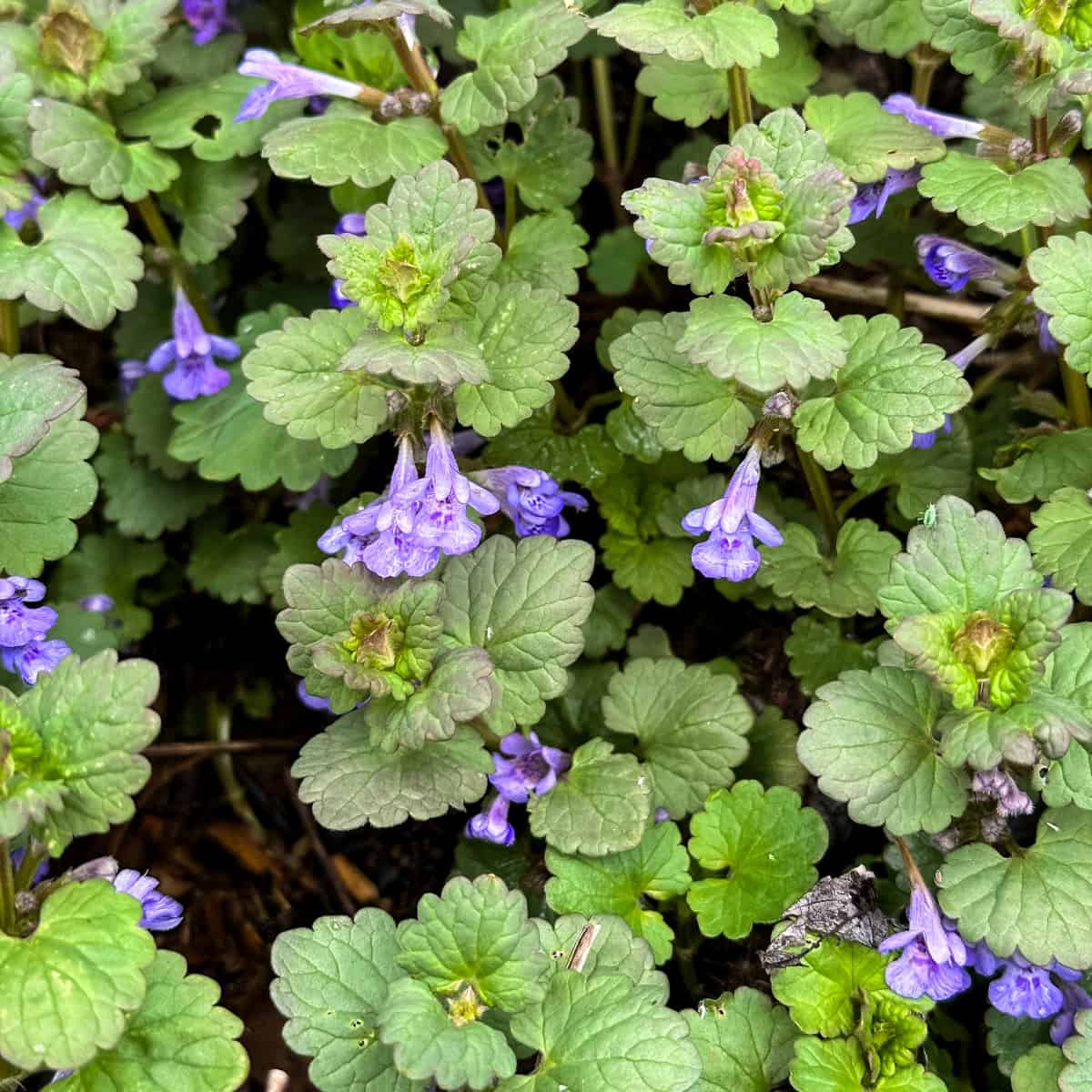
Ground ivy, popularly known as creeping charlie, is a wild edible weed that pops up in early spring. This low-growing, creeping plant can be a ground cover, used in herbal practices, and in the kitchen. With dainty purple flowers and scalloped leaves, creeping charlie is a plant to keep around!
Want to save this post for later?

Have you ever wondered if the weeds in your backyard are useful?
Foraging & Using Backyard Weeds, my ebook, teaches beginning foragers how to identify common edible and medicinal plants that are probably growing in your backyard.
You’ll learn straightforward techniques and recipes to forage and use wild edible weeds with confidence!
About Creeping Charlie
Creeping charlie is a popular name for ground ivy (Glechoma hederacea), which is a common weed that grows almost everywhere worldwide. It usually grows on lawns and spreads with runners that tend to take over an area.
Other than creeping charlie, this early spring plant has many other nicknames, too. Gill-over-the-ground, ale hoof, and runaway Robin, to name a few.
As part of the mint family, creeping charlie absolutely lives up to its name and has been known to take over areas of yards and gardens. Similar to a mint takeover but with a different growth pattern.
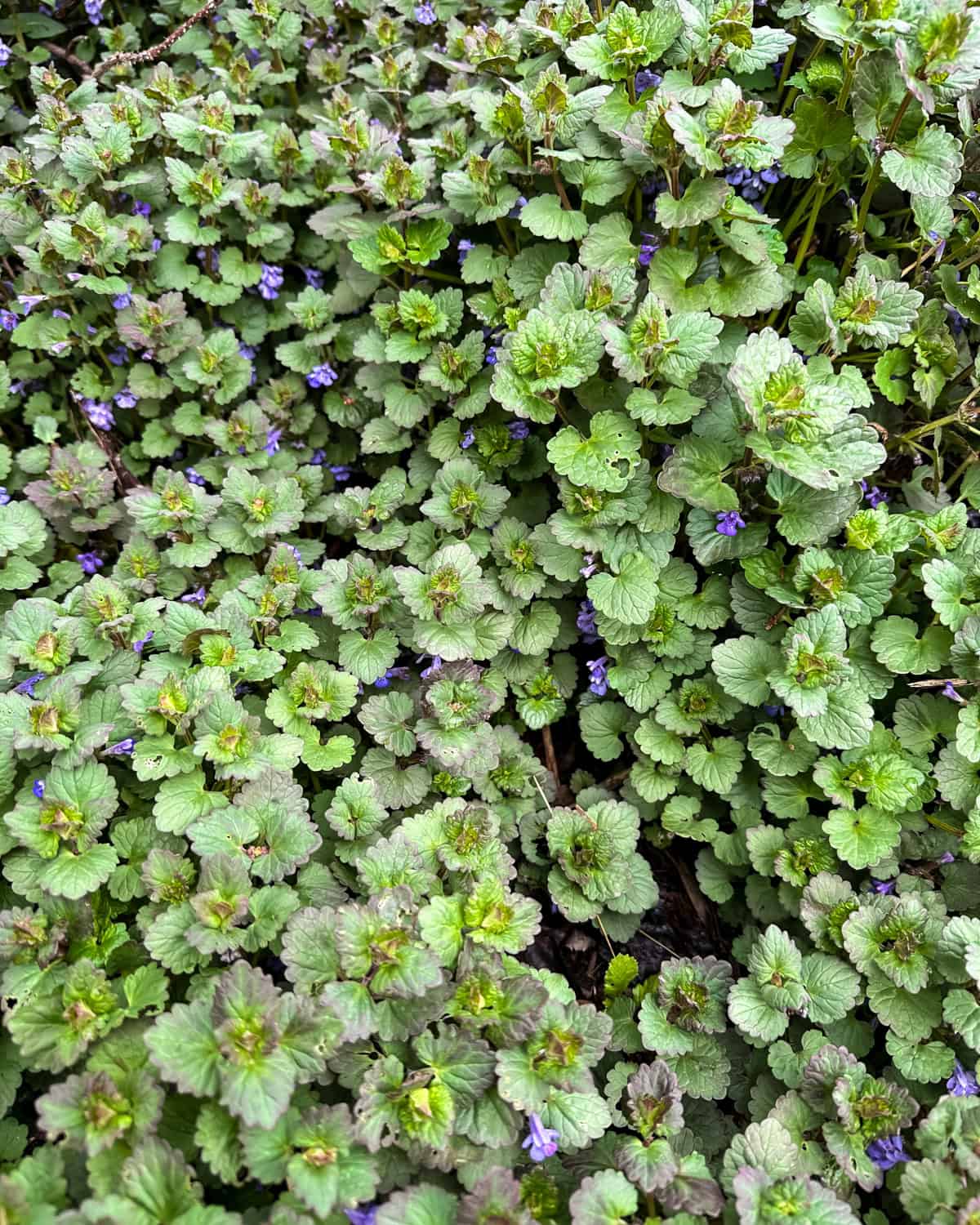
Ground ivy grows low and winds itself into mats. It makes a great ground cover and will stifle other unwanted weeds with its takeover quality. It’s a fast-growing, perennial weed that might bother some gardeners! However, it’s quite useful to herbalists and foragers.
It’s easily established in lawns and shady areas, although it’s resilient and can survive in full sun and disturbed areas with enough moisture.
While seen as a weed, this edible wild green is actually really beautiful with its low-growing cover of green leaves and small purple flowers. It has a minty smell and is easy to forage.
Why I Love This Creeping Charlie

Creeping charlie is a perfect wild-growing weed for beginners, with a no-stakes reward since all of its look-alikes are non-toxic, too. With how plentifully it grows, there is no harm in taking it by the handful! Additionally, it has a wide variety of uses, including use as a raw edible green, for brewing, and for herbal support, and it looks lovely as a garden ground cover. You really can’t go wrong with this easy-growing plant!

Where to Find Creeping Charlie
Creeping Charlie thrives in most areas, just like most resilient plants in the mint family. It grows easily in most of North America except in deserts and extremely cold areas.
Ground ivy prefers damp, shady areas. It will take over grassy areas that don’t get enough sun and are too wet for grass to thrive.
However, it is highly adaptable and can still be found growing in full sun in gardens, roadsides, and sunny lawns and pastures, as long as they get enough water.
How to Identify Creeping Charlie (Ground Ivy)
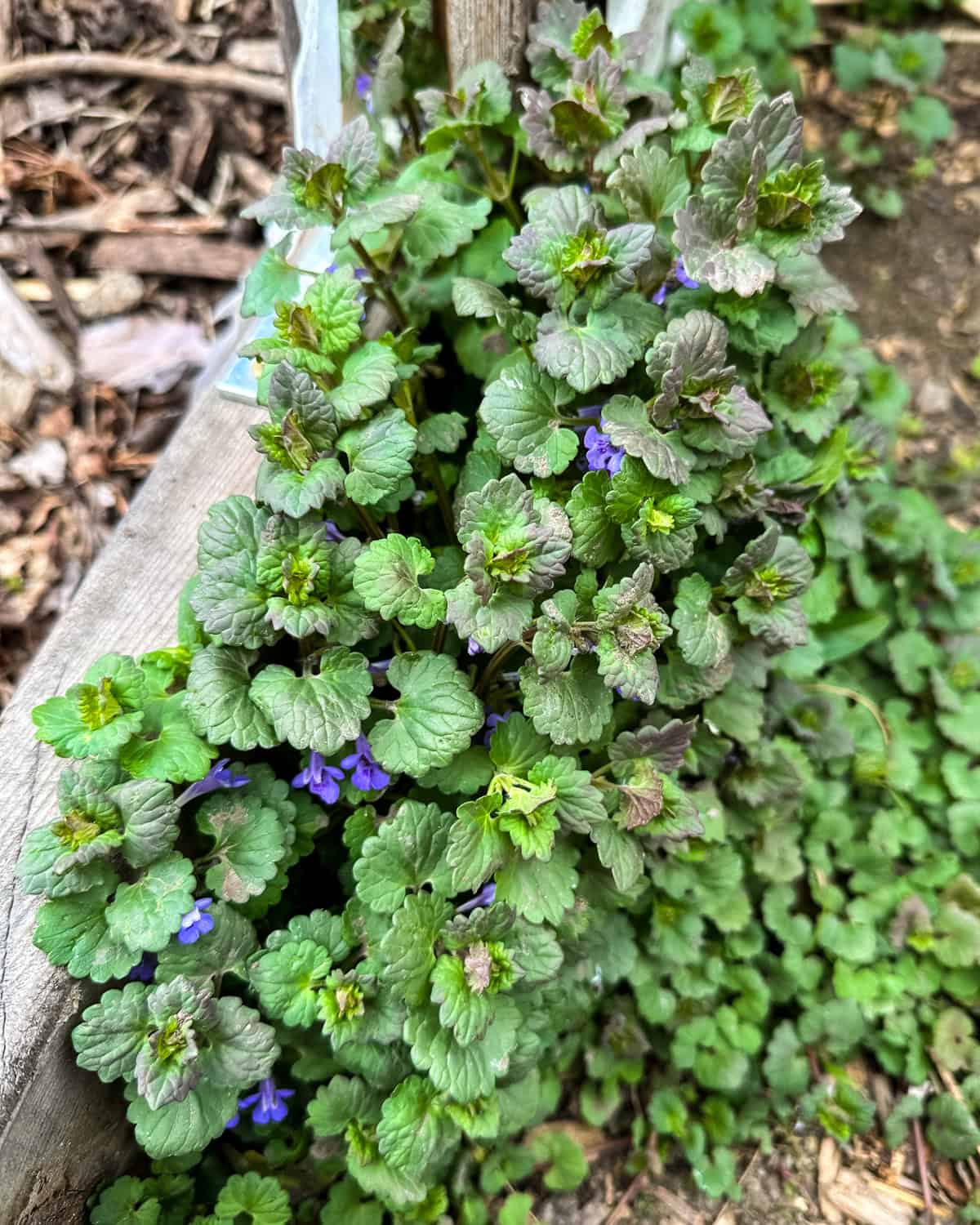
Creeping Charlie leaves are round or kidney-shaped, with scalloped edges. Each stem has 3 to 7 funnel-shaped flowers that are blueish purple and have darker streaks on the lower petals.
The flowers grow from the leaf axils and appear to have an upper and a lower lip. The upper lip is notched, and the lower is made up of three petals.
Ground ivy leaves and flowers look quite similar to henbit, another early spring weed. The leaves have a minty smell when pressed. However, it’s quite strong and a bit earthier.
Since it’s in the mint family, ground ivy has a square stem. The stem is green or reddish in color and can “creep” up to lengths of about 7 feet long. The flower stems can stand up to 8 inches, depending on the time of year and the location.
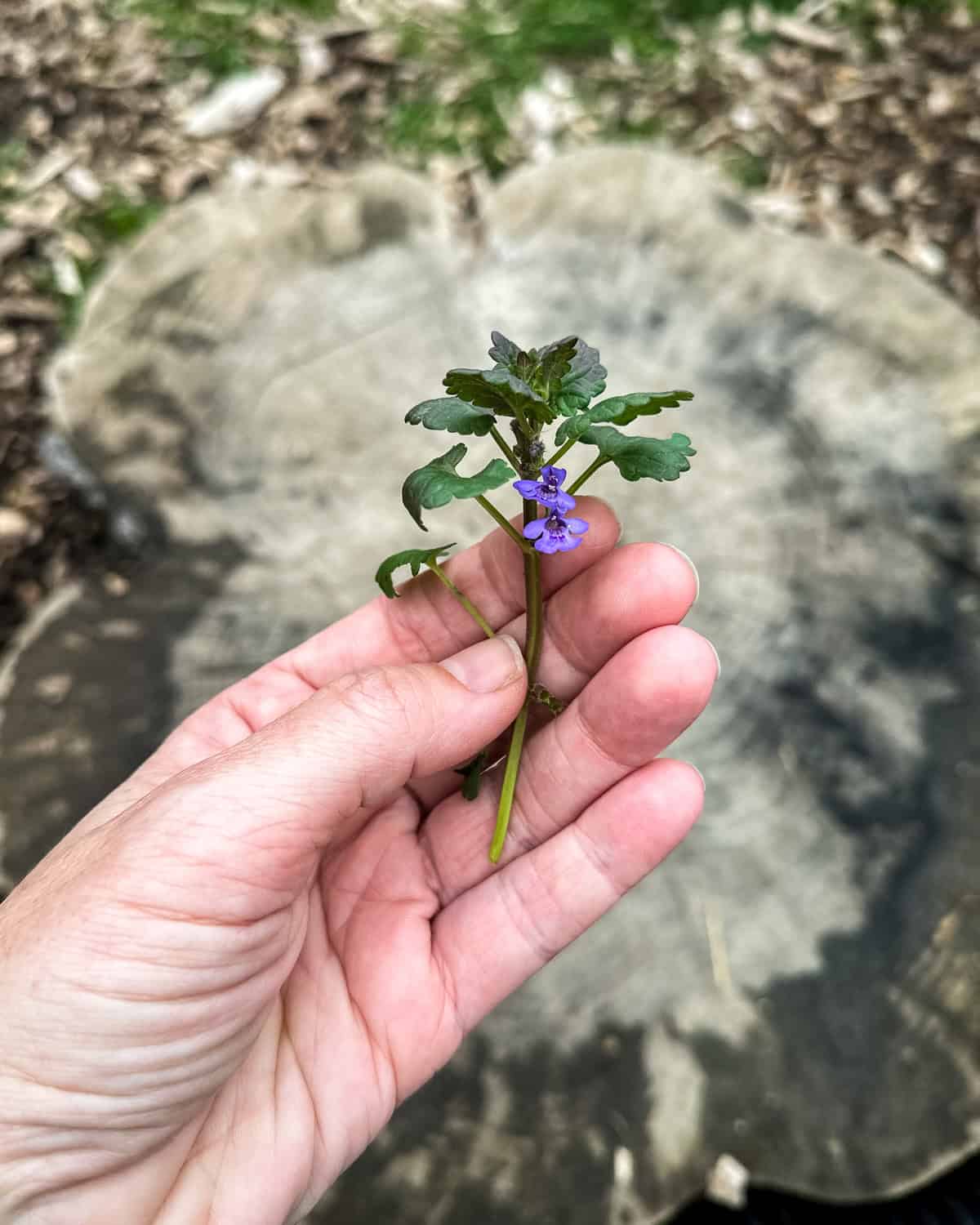
Harvesting Ground Ivy
Harvesting creeping charlie in early spring is best before it gets too bitter, although it tends to be slightly bitter even when young. The whole plant is edible, including the shoots, leaves, and flowers.
Since it grows so quickly and prolifically, it’s ok to harvest ground ivy in large bunches. It can be used fresh or dried, so if you have an abundant amount to clear out, drying it is a great option for later use.
When foraging outside of your own yard, it’s important to ensure that you harvest from an area that isn’t sprayed with harmful chemicals. Plants considered “weeds” and that grow with such gusto are at higher risk of herbicides.
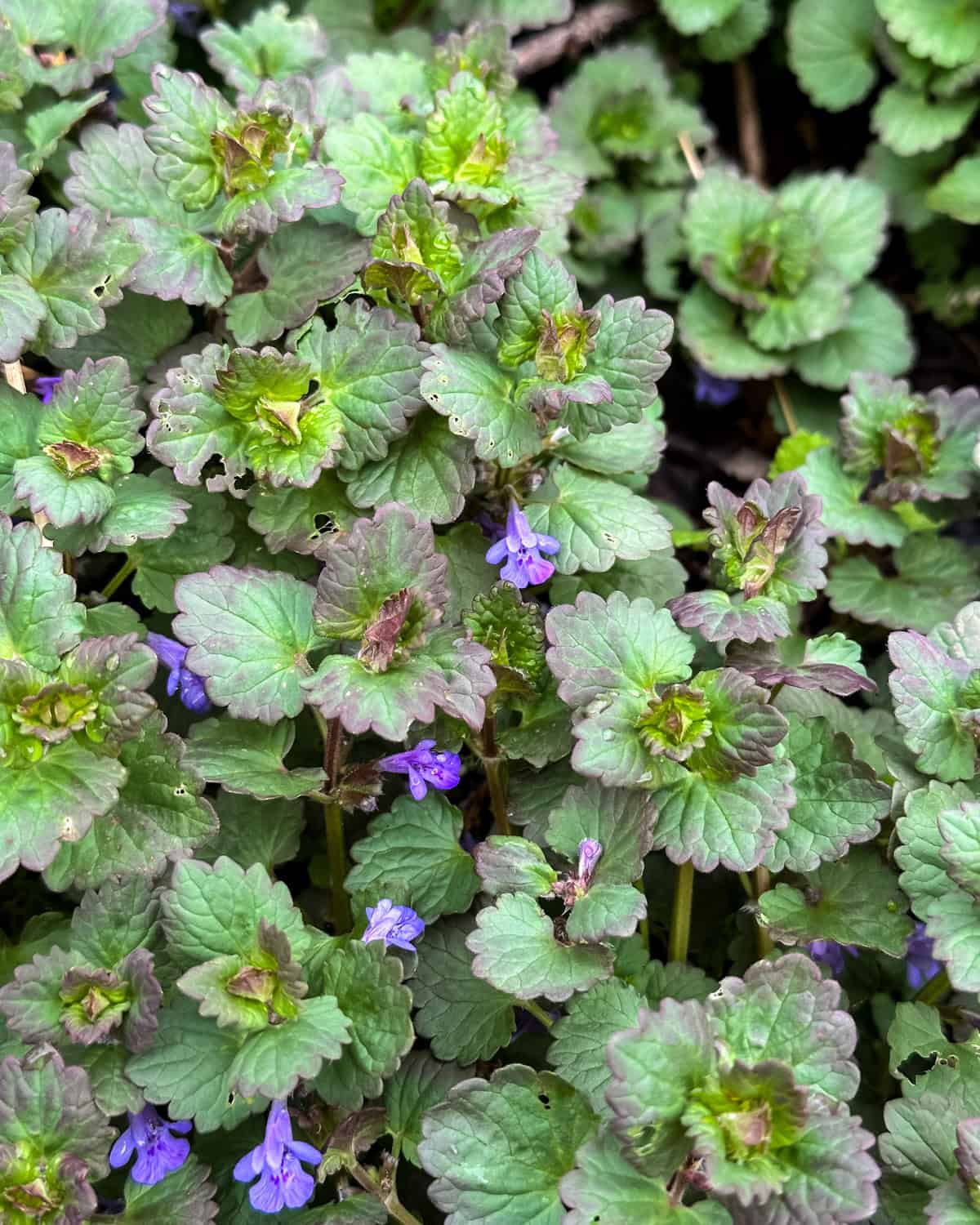
Ground Ivy Look-a-Likes
Ground ivy resembles common mallow, purple dead nettle, and henbit. All of these wild greens are also edible, so don’t worry about mixing them up when consuming.
With that said, it is important to know the difference between the plants you are using for foraging herbalism practices. The most similar in looks and growing season to ground ivy are henbit and purple dead nettle.
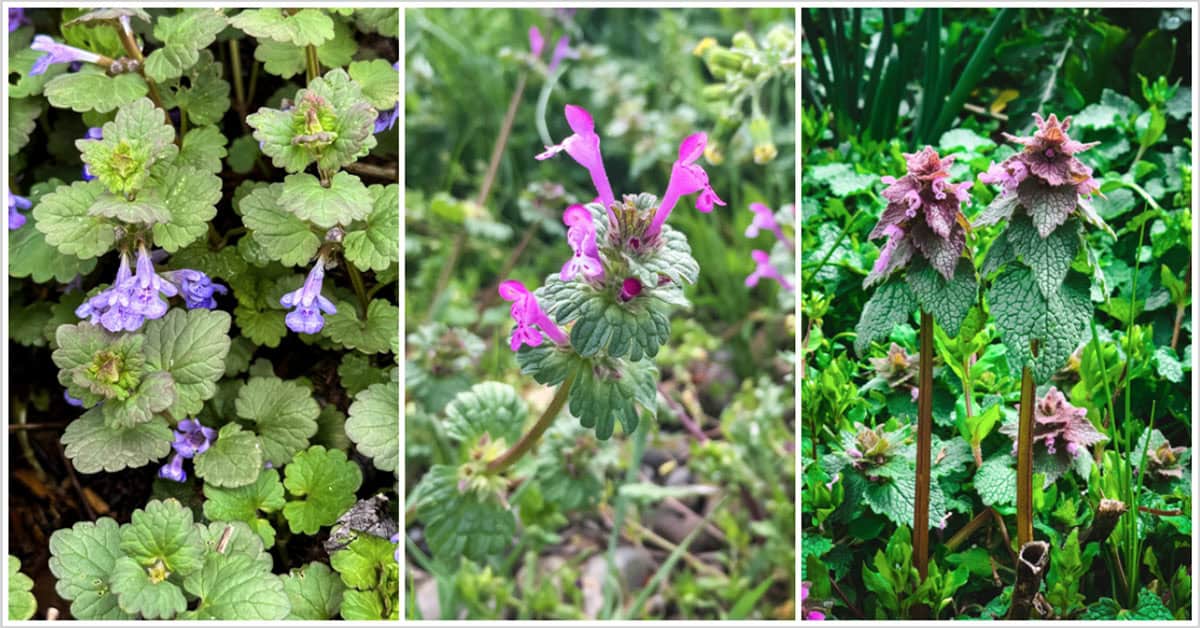
Let’s look at some of the easy ways to tell the difference between creeping charlie (ground ivy), henbit, and purple dead nettle.
Henbit (vs. Creeping Charlie)
Leaves
- Whorled leaves and flowers around the stem.
- Leaves do not have stems of their own.
- Deepest scallops on leaves.
- No hairs on leaves.
Stem
- Deep red stem.
- Stem stalk visible between sets of leaves.
Flowers
- Long flowers.
Purple Dead Nettle (vs. Creeping Charlie)
Leaves
- Heart-shaped, with a more pointed end.
- Leaves are also not as deeply scalloped as ground ivy.
- Hairy.
- Change color to purple or reddish.
Stem
- Square shaped.
Flowers
- Pink blooms.
Edible Uses of Creeping Charlie
Ground ivy is a consumable and nutritious edible weed. In the past, it was used to make beer before hops became popular. Today, folks tend to use it in wild salads, salad dressing, or to flavor meat or soups.
It’s a little bit minty, so in a pinch, it could replace mint in a recipe. Or, make horseradish and ground ivy-infused vodka for Bloody Marys. Yum!
Herbal Uses of Ground Ivy
In addition to its longstanding use in brewing beer and other delicious flavorings, ground ivy has traditional folk herbal uses. It’s known by herbalists and scientifically proven to have potent antioxidant and antimicrobial properties, which can lend its use to many common ailments.
Traditional herbalists rely on ground ivy for a plethora of uses, notably for respiratory ailments like asthma, bronchitis, common colds, and sore throats. It is also used to help with coughs and as a lung expectorant.
Along with mint, creeping charlie is also used by herbalists as a diuretic and to treat headaches.
Studies have shown that ground ivy has properties that can protect the liver and that it inhibits 14 bacterial species.
It’s a rich source of vitamin C, potassium, and iron.
Creeping charlie can easily be made into a tea, poultice, compress, or tincture. These are all easy and wonderful ways to access the herbal goodness of this plant!
Are all varieties of Creeping Charlie edible. I have a variegated type that crept out of hanging planters
There is only one true species of ground ivy, Glechoma hederacea.
Hi, I have purchased and enjoying your ebooks.
I’m slowly trying along with a few friends. I’m now clearing further garden space for herbs & weeds.
Thanks Val
That’s so great to hear, Val!
I have read somewhere that Creeping Charlie was also used for hearing issues.
More ways to use creeping Charlie, please!
The specifics for teas :)
Thanks!
I really liked your creeping g Charlie article. But there are so many pop ups and ads that it was too distracting. I nearly closed out of the whole thing.
I went to buy an e book but didn’t because of this frustration!
Hi Kristy. I’m really sorry. The ads that are displayed are how I make an income, while continuing to offer my readers free content.