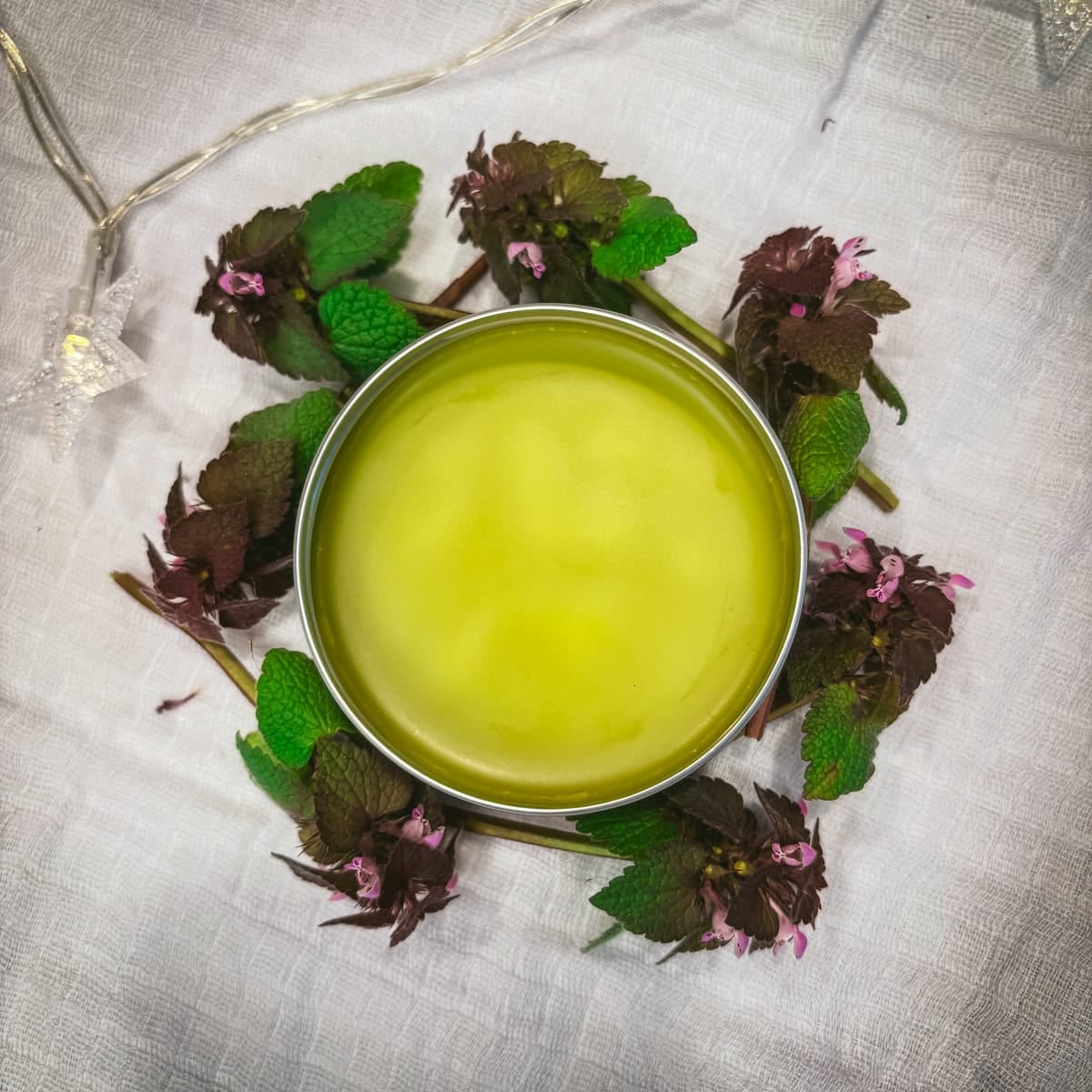
Purple dead nettle makes a soothing salve that is easy to make and gentle on the skin. This early spring plant has some great uses for the skin and is perfect for a beginning herbalist to make. Purple dead nettle is easy to find, easy to harvest, and easy to use, making it a perfect herb for this salve!
Want to save this post for later?
About Purple Dead Nettle
Purple dead nettle is a very common plant that grows wildly in most places across the United States. It grows abundantly in early spring, and it is very easy to identify and forage for.
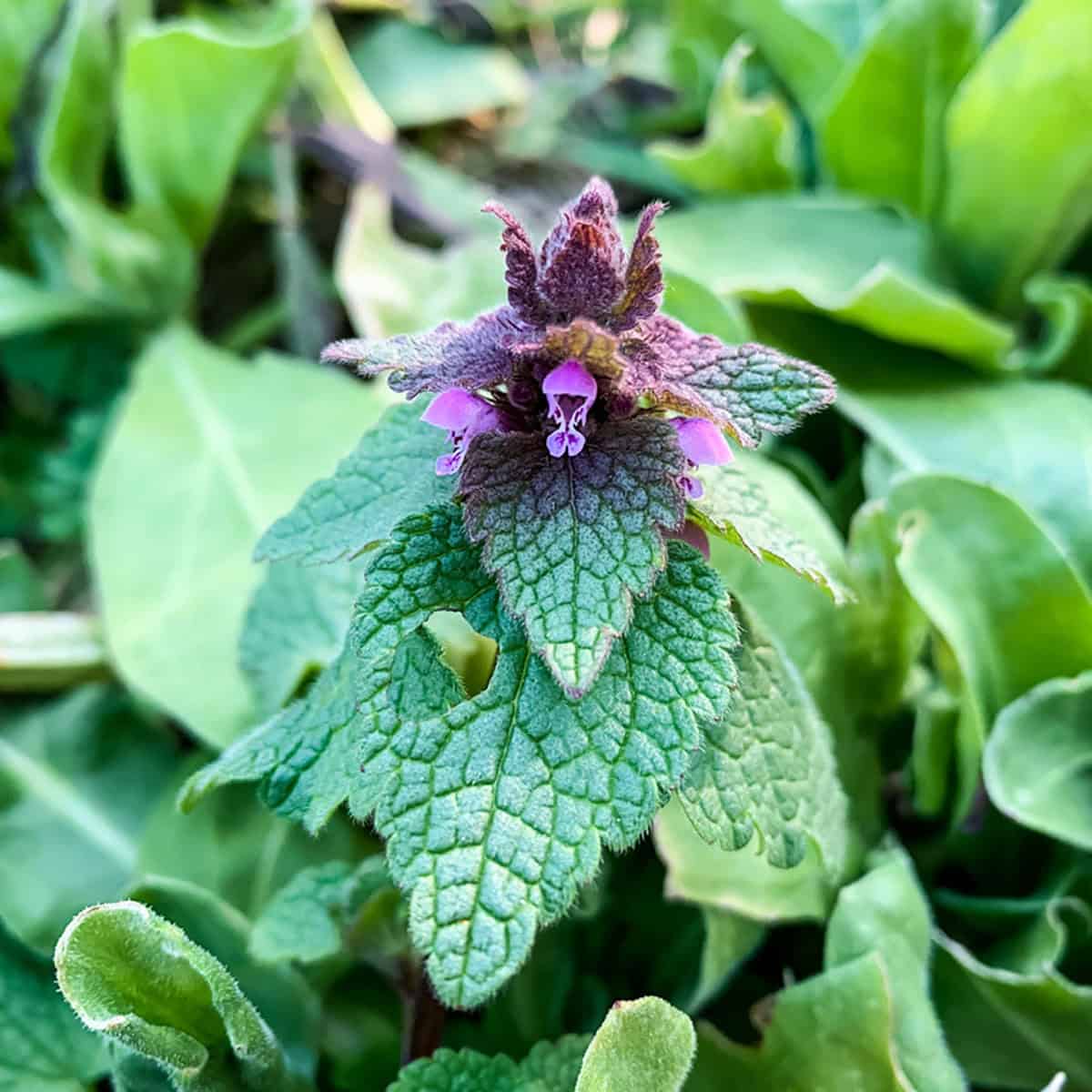
Once you know what to look for, you’re likely to notice purple dead nettle everywhere. It’s probably even in your yard, which is a great, safe place to forage for it since you know it’s unsprayed.
Purple dead nettle doesn’t have any toxic look-a-likes, so it’s a perfect plant for a beginner forager and herbalist to use. It’s a wonderfully abundant, nutritious, and very useful herb, so even seasoned foragers and herbalists make good use of it!
Purple Dead Nettle Uses
Purple dead nettle is edible and is very nutritious! It’s considered a superfood, and the purple tops are a little bit sweet. With fuzzy leaves, it’s most commonly used as a garnish, mixed with other greens, blended in soups and smoothies, or made into tea.
For topical use, it also contains compounds with anti-inflammatory, antibacterial, and antifungal properties, though further research is needed to fully understand its effects.
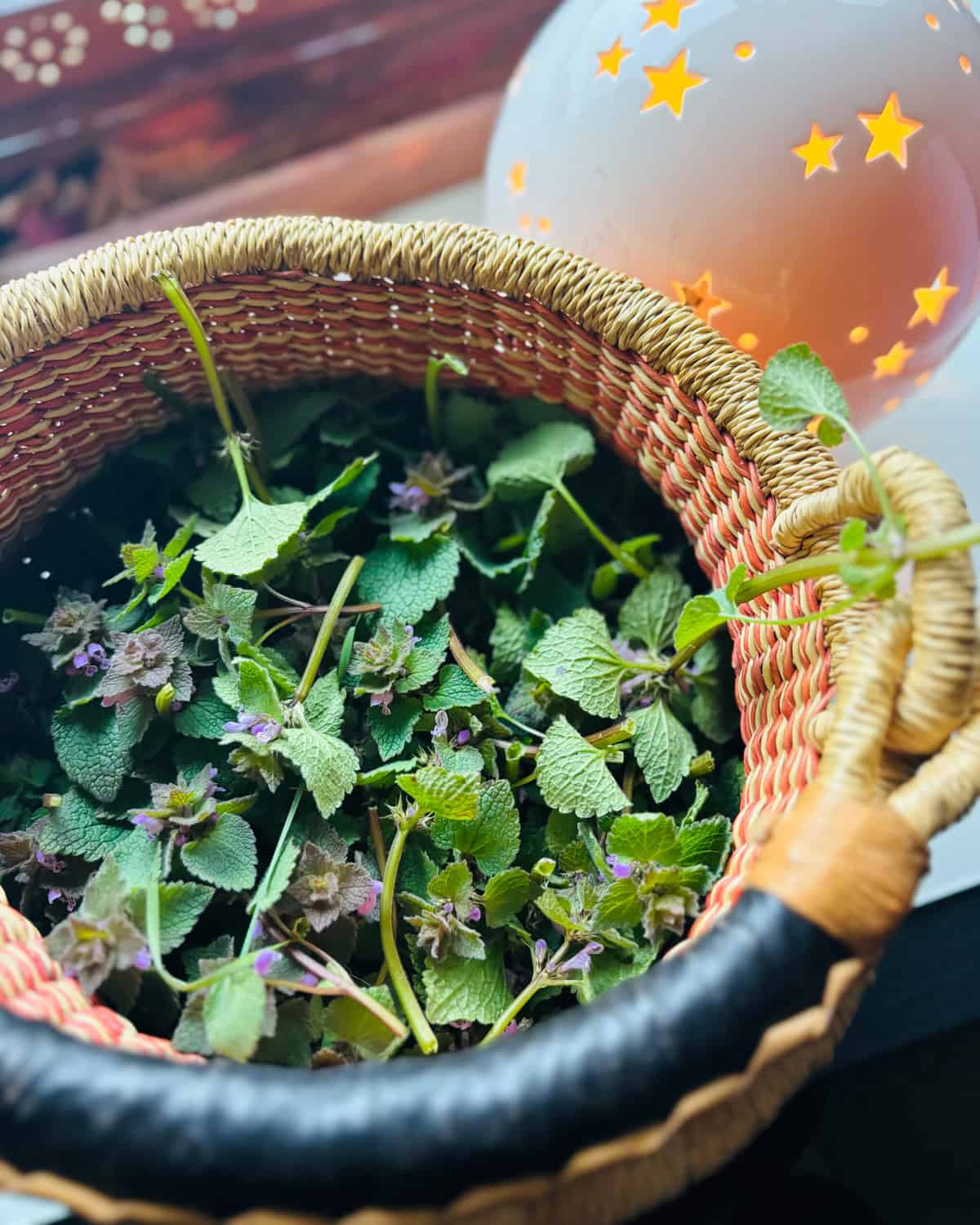
In traditional herbalism, purple dead nettle is applied to minor wounds or cuts, sometimes as a poultice, though scientific evidence on its wound-healing properties is limited. (This is similar to how you would use yarrow or plantain.)
Studies suggest that Lamium purpureum (purple dead nettle) contains bioactive compounds, including flavonoids and phenolic acids, that may contribute to its traditional medicinal uses.
The entire genus, Lamium, is used in folk medicine for its proven antispasmodic, astringent, anti-inflammatory, and antiviral properties.
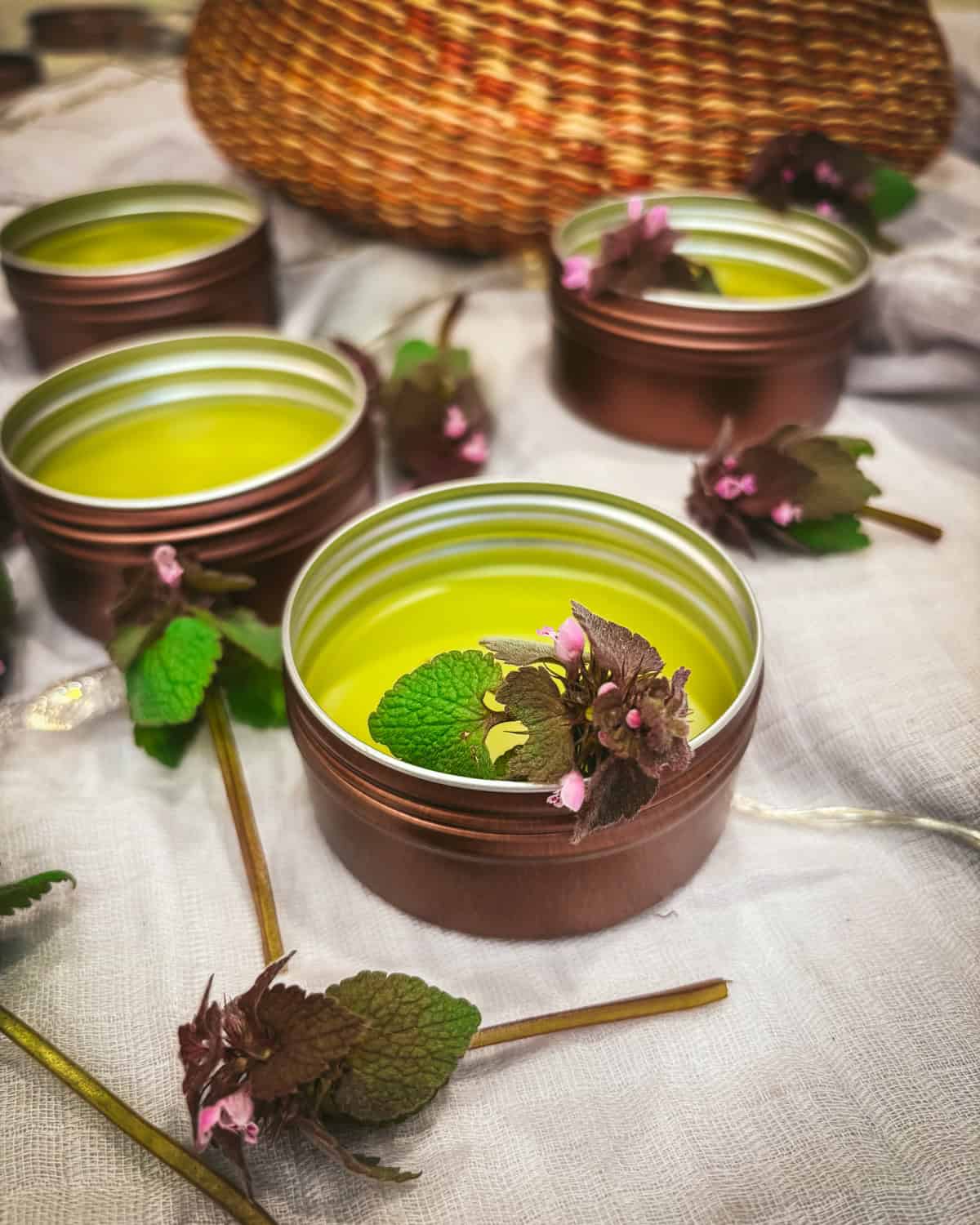
This salve is an easy way to access the topical powers of purple dead nettle in a soothing formula that supports skin that needs a little boost!
How To Make Purple Dead Nettle Salve
Ingredients
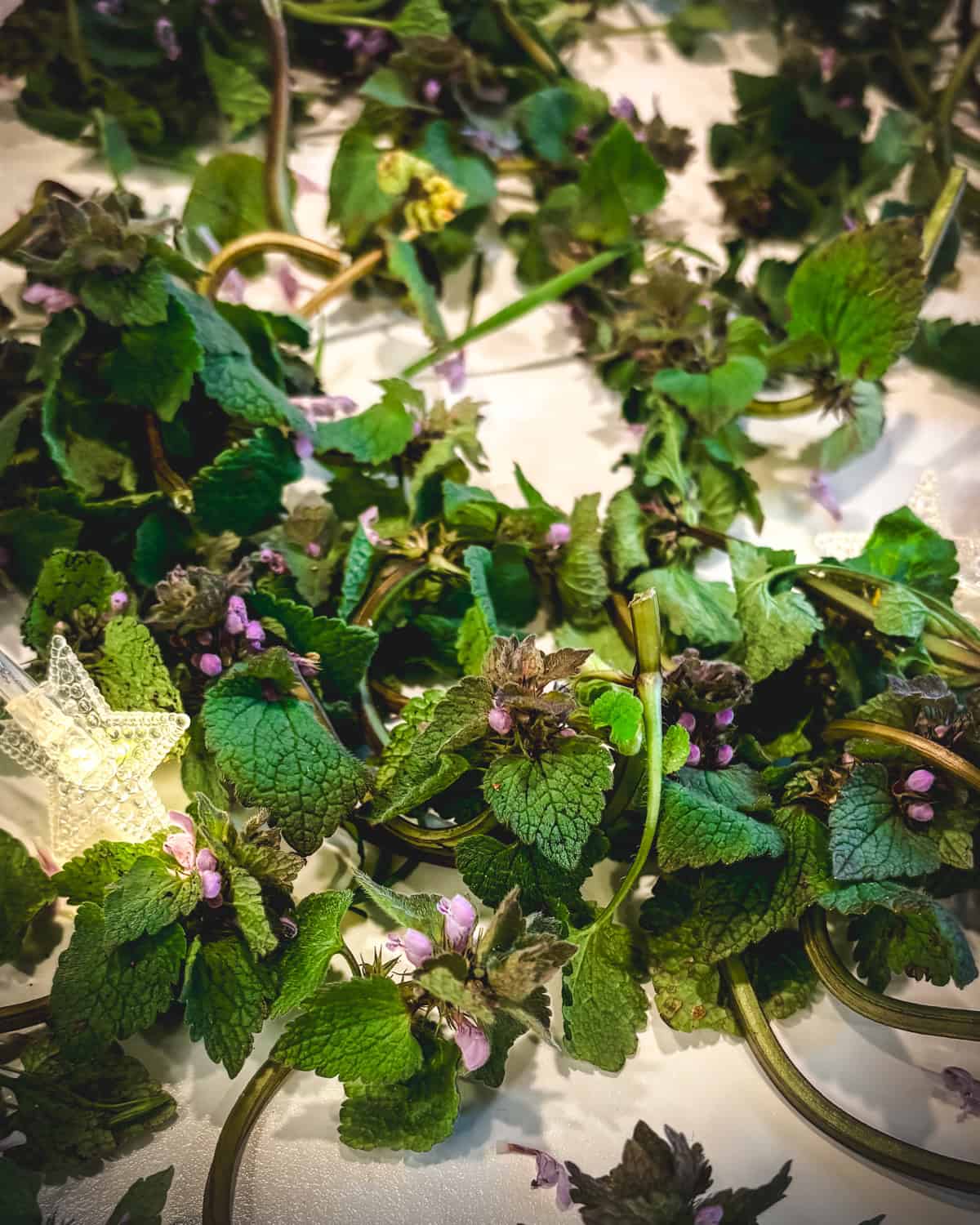
Dried Purple Dead Nettle: It’s usually easy enough to find enough purple dead nettle in one area to use for this salve. It takes about one cup of dried plants, so overshoot the amount a little bit, and lay them out to dry for a couple of days.
Carrier oil: Olive oil works great as a carrier oil, and you likely already have some on hand. I often use a blend of about 50% olive oil, 25% coconut oil, and 25% sweet almond oil, but this time I just used extra virgin olive oil.
All of these oils have their own benefits, and you can use any combination that you want.
Beeswax: I used beeswax pastilles for this salve, and they worked perfectly. Any type you prefer works great, though!
Essential Oils: For scent only, this is optional. I used half peppermint and half lavender, and it smells wonderful!
Make The Infused Oil
Once you’ve foraged and dried enough purple dead nettle, put the dried plants into a pint jar. Cover the purple dead nettle completely with olive oil (or any carrier oil of choice).
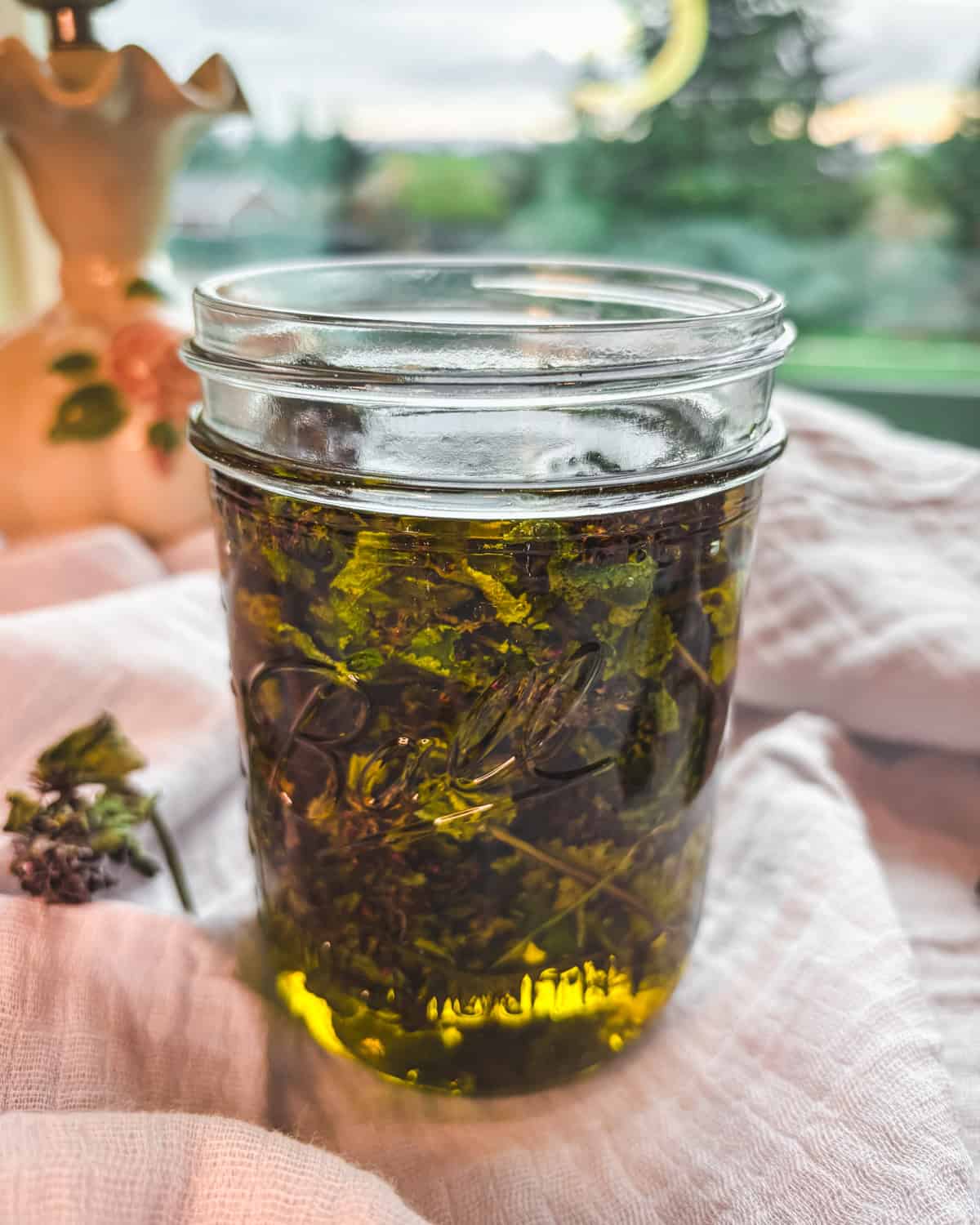
Cover the jar with a lid and place it in a cool place out of direct sunlight. Inside a pantry or on a dark counter corner works perfectly. Let it infuse for at least a week, and up to 6 weeks. This method works best if your purple dead nettle plants are completely dry.
Alternatively, it works just as well to use the quick heat method to infuse the oil. This method is best if your purple dead nettle plants aren’t completely dry. That’s what I did, and it turned out wonderfully!
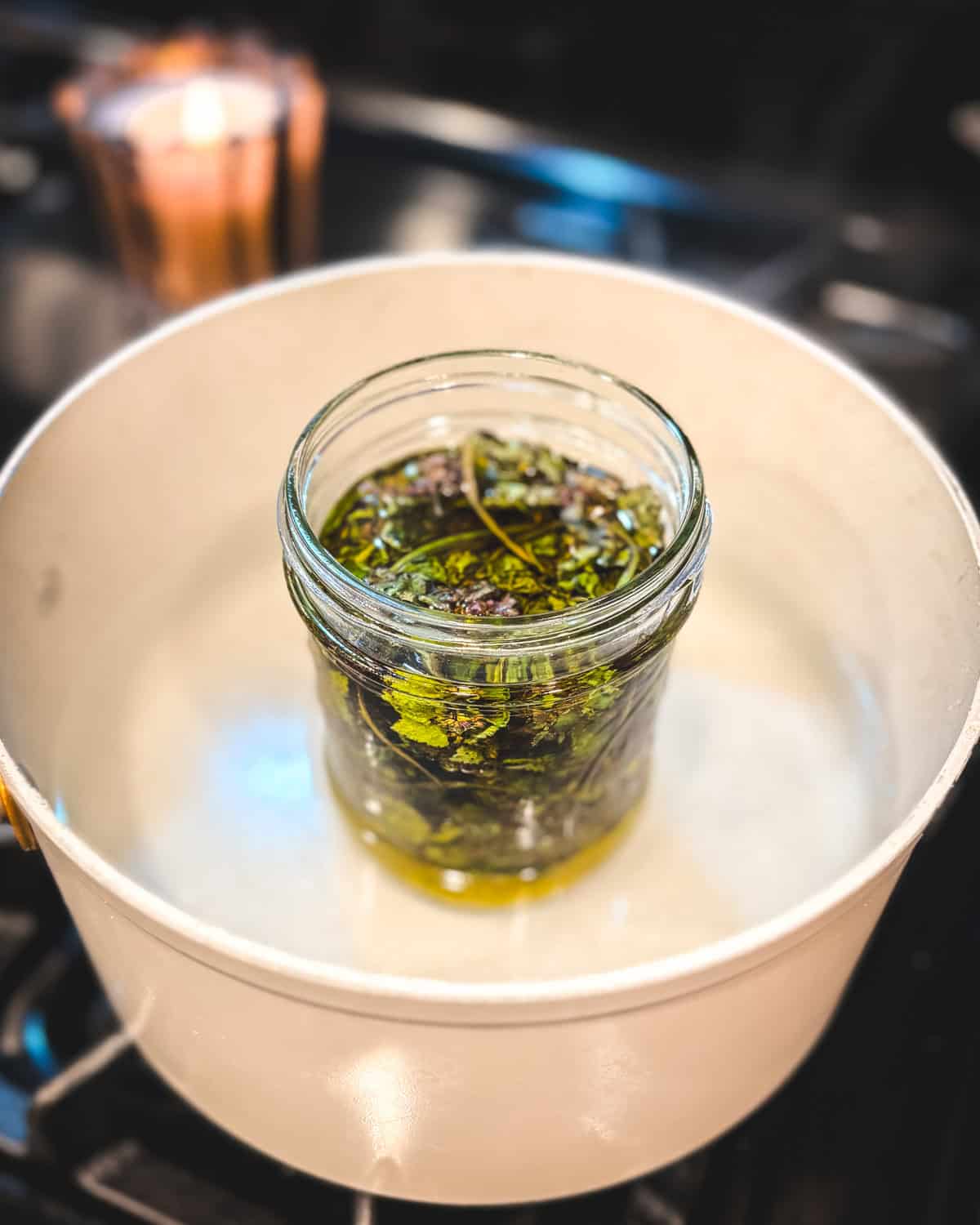
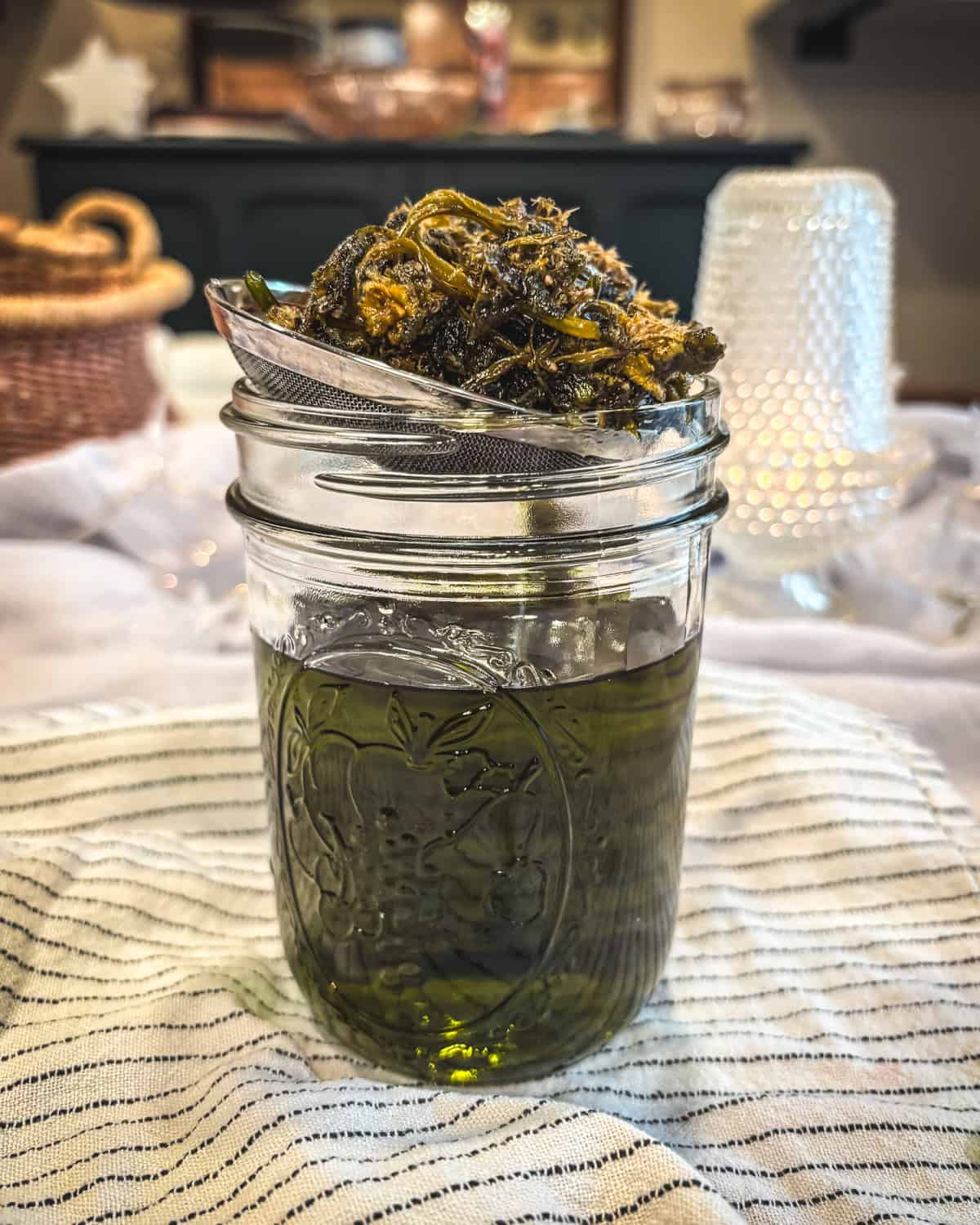
Once the oil is fully infused and you are ready to make the salve, strain out the purple dead nettle and reserve the infused oil.
Make The Salve
First, create a makeshift double boiler by putting a smaller pan, bowl, or glass measuring cup in a larger pan with an inch or two of water in it. Bring the water to a simmer.
Measure out one cup (240ml) of the purple dead nettle infused oil (save any excess oil you may have to use topically).
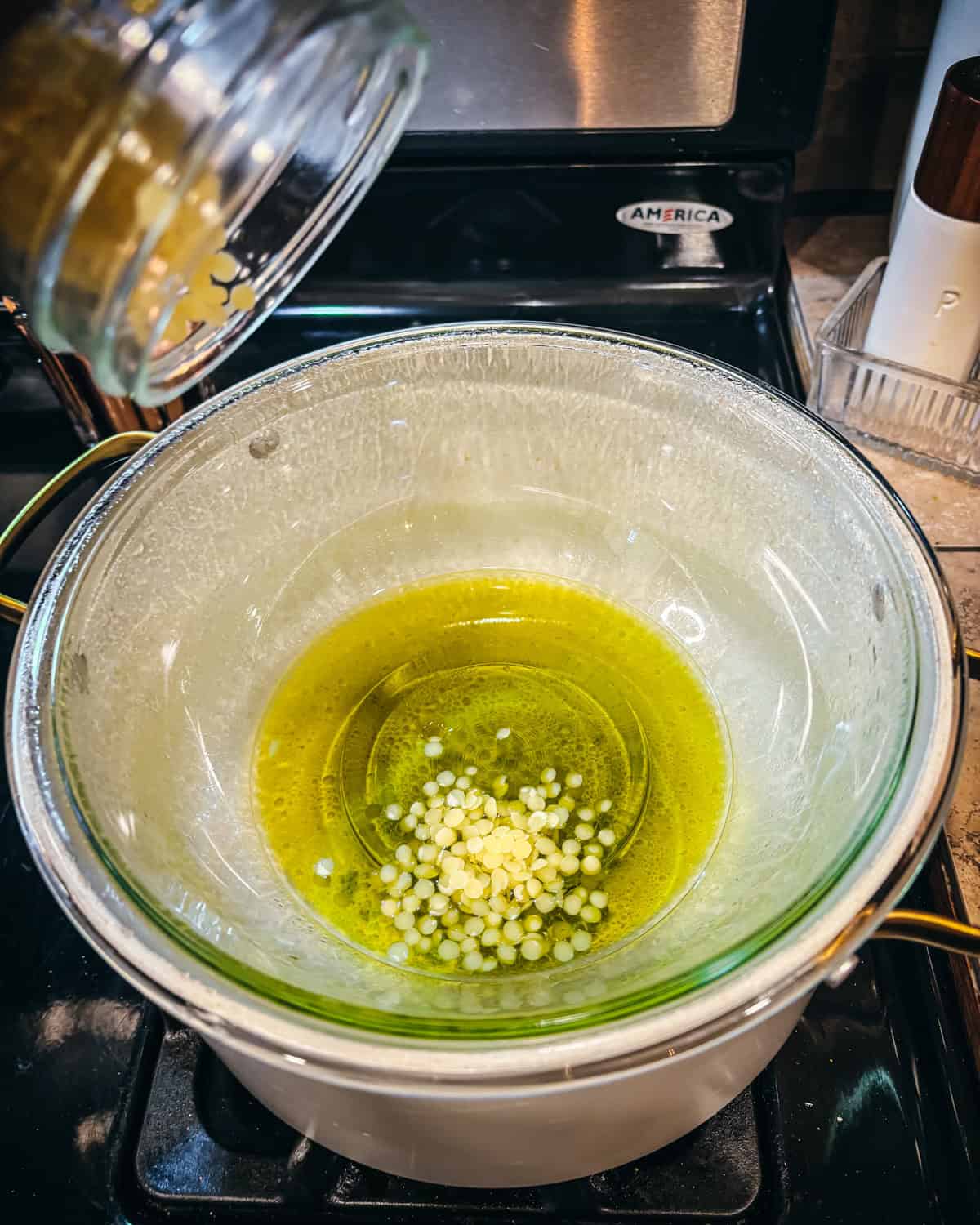
Put the oil into the double boiler. Add the beeswax to the oil and continue to heat until it completely melts. A wooden skewer works well as a stirrer. Then, remove the mixture from the heat.
Quickly stir in the optional essential oil drops if you choose to use them. Then, carefully pour the salve mixture into tins or jars.
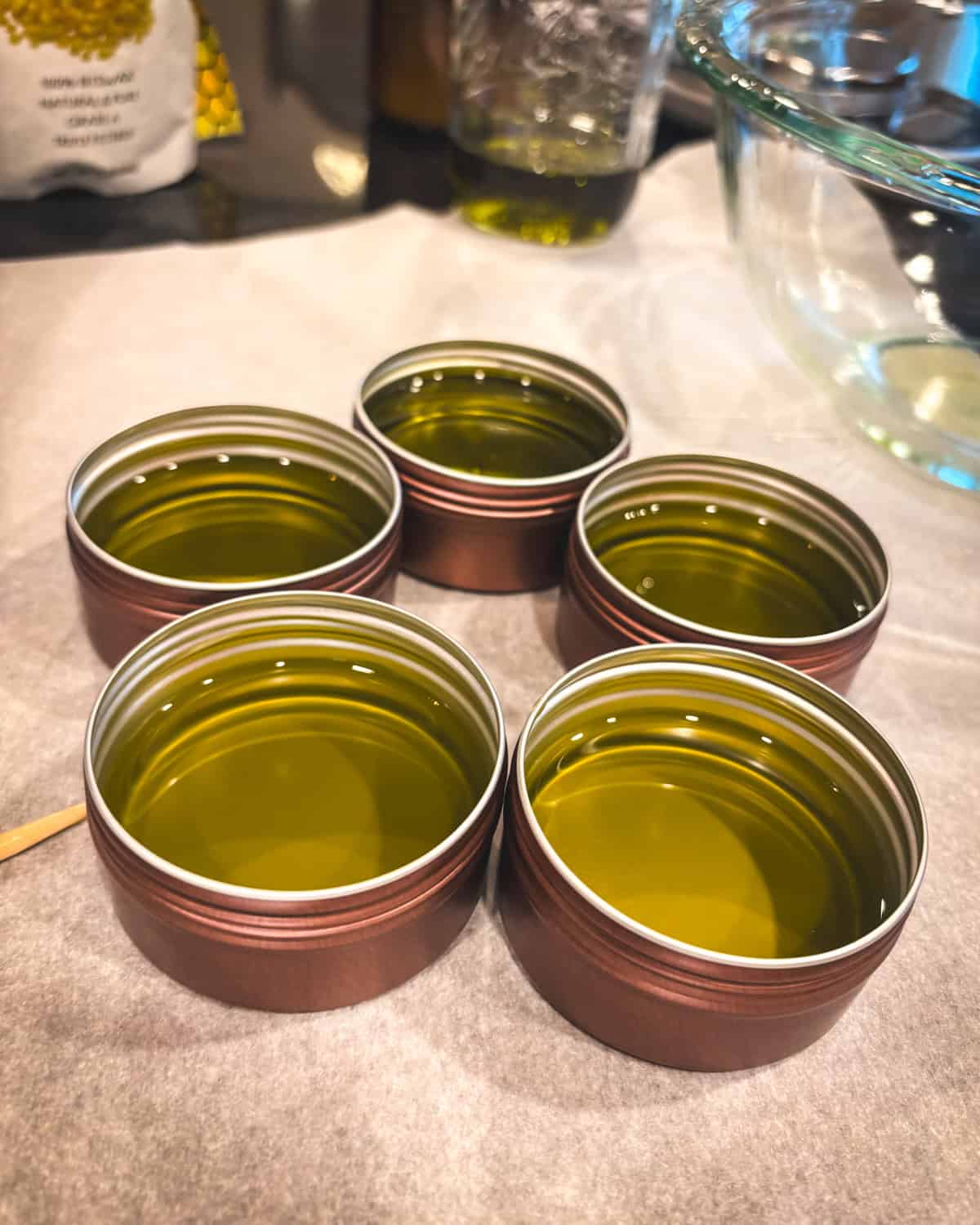
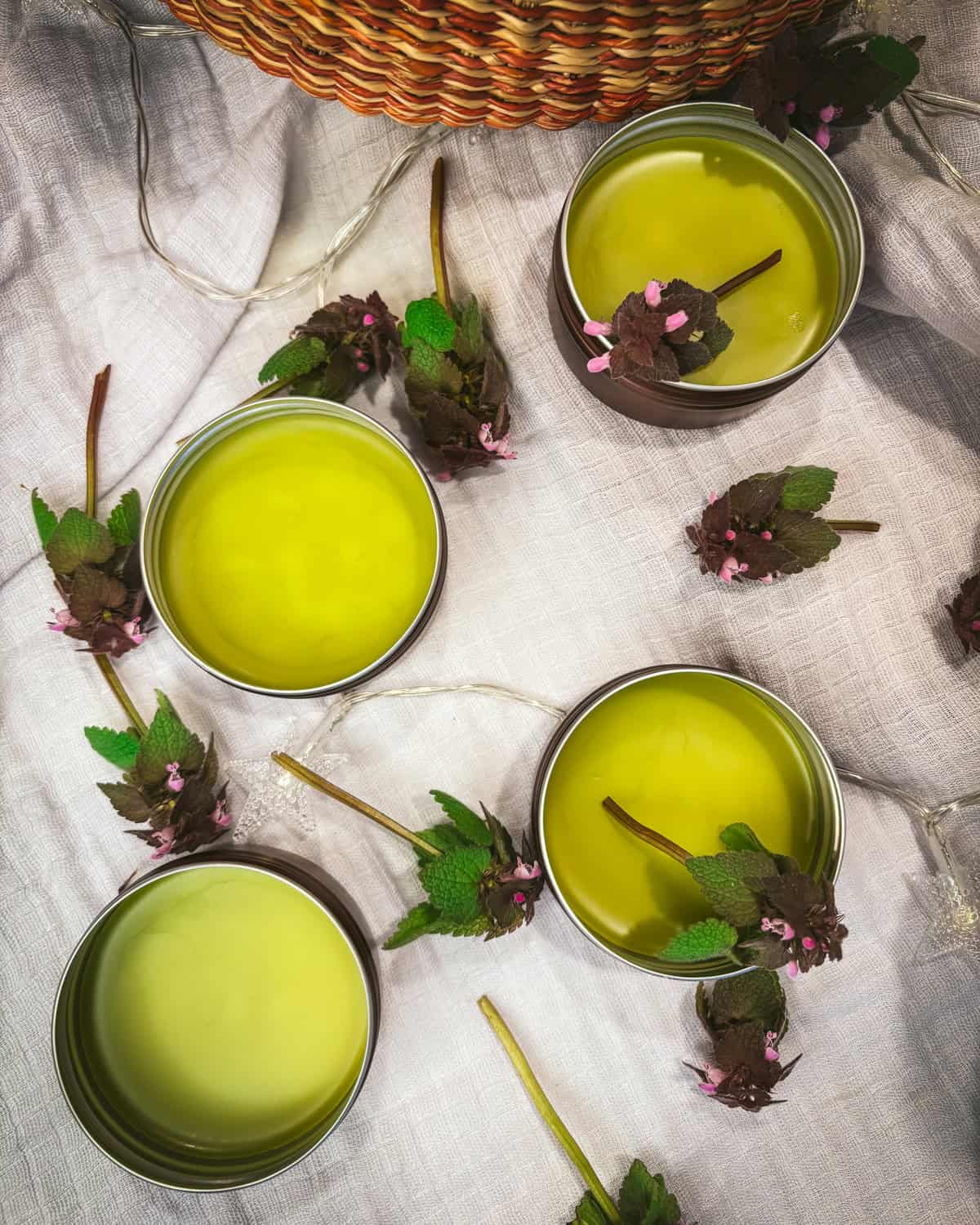
Let the salve sit undisturbed until it is completely cooled and set up before use. This will take several hours. Once it’s completely cool and set, it’s ready to use!
How to Use Purple Dead Nettle Salve
Use purple dead nettle salve on any minor scrape, scratch, bug bite, bee sting, or other skin irritation. It can help soothe most rashes, redness, or dry skin due to its anti-inflammatory properties.
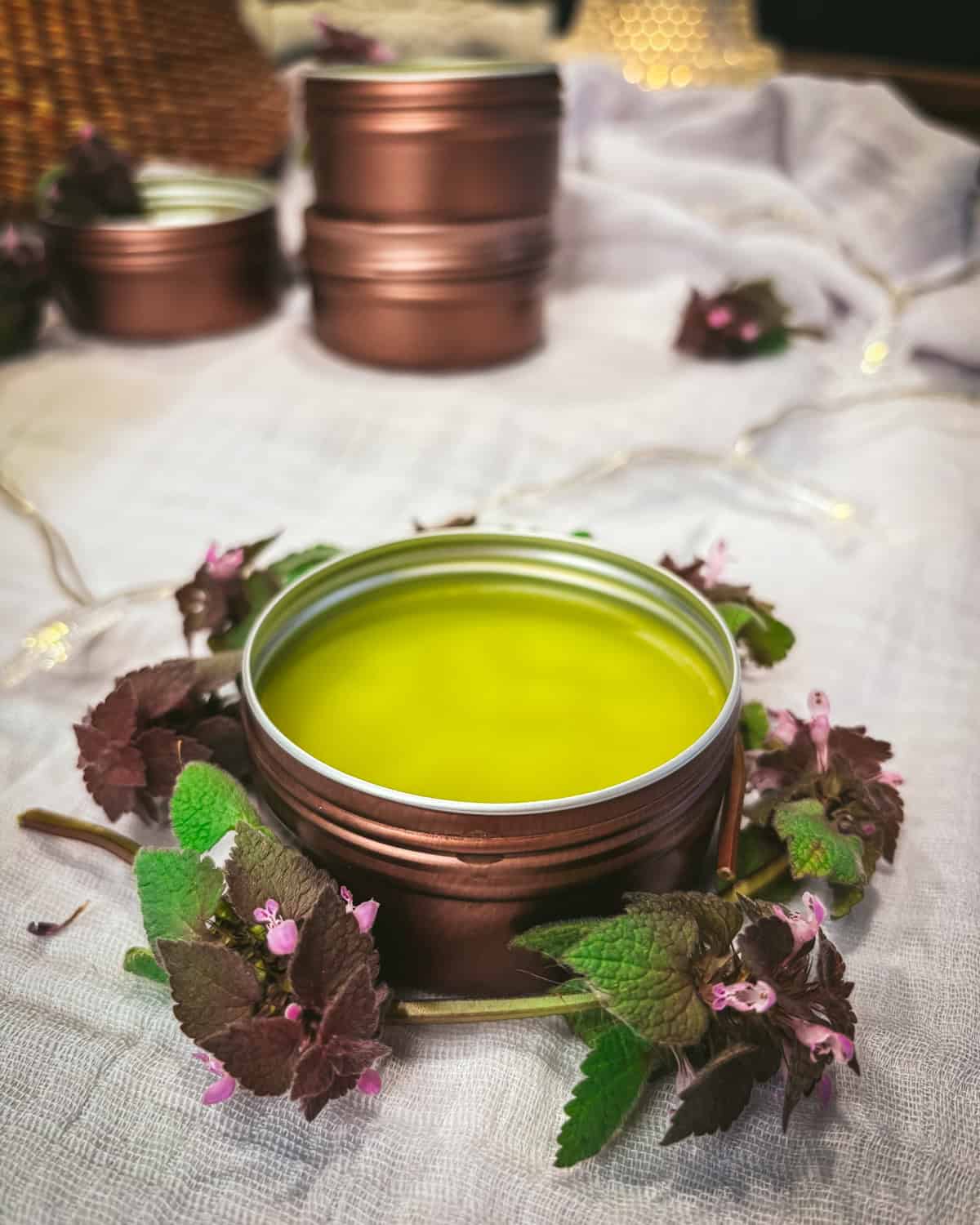
Since purple dead nettle has antibacterial properties, it can also work to support skin that is itchy and irritated from a fungal infection.
Keep this soothing salve within reach; it’s useful in a wide variety of situations!
More Herbal Salve Recipes
Purple Dead Nettle Salve
Equipment
Ingredients
Infused Oil
- 1 cup purple dead nettle dried
- 1½ cup extra virgin olive oil
Salve
- 1 cup purple dead nettle infused oil
- 1 ounce beeswax pastilles
- 24 drops essential oil optional
Instructions
Make Purple Dead Nettle Infused Oil
- Put the purple dead nettle plants into a pint jar. Cover the purple dead nettle completely with olive oil.
- Cover the jar with a lid and place it in a cool place out of direct sunlight for at least a week and up to 6 weeks.
- Once the oil is fully infused and you are ready to make the salve, strain out the purple dead nettle, reserving the infused oil.
- Alternatively, if your plants are not completely dry, use the quick heat method to infuse the oil.
Purple Dead Nettle Salve
- Create a makeshift double boiler by putting a smaller pan, bowl, or glass measuring cup in a larger pan with an inch or two of water in it and bring the water to a simmer.
- Measure out 1 cup (240ml) of the purple dead nettle infused oil (save any excess oil you may have to use topically).
- Put the oil into the double boiler. Add the beeswax to the oil and continue to heat until it completely melts. A wooden skewer works well as a stirrer. Then, remove the mixture from the heat.
- Quickly stir in the essential oil drops if using.
- Quickly and carefully pour the salve mixture into tins or jars.
- Let the salve sit undisturbed until it is completely cooled and set up before use. This will take several hours.
Notes
- This recipe makes about 10 ounces of salve total, or five 2-ounce tins.
- It’s best to use dried purple dead nettle to make this salve. Spread out the fresh foraged plants on a drying screen or tea towel and let them sit for several days or until dry.
Leave a Reply