Learning how to make an infused herbal oil is the first step in making numerous all-natural body care recipes like herbal salves, body butters, and creams. Making an infused oil is easier than you might think, and the perfect first project for a beginner herbalist.
Want to save this post for later?
How to Make an Infused Oil
Knowing how to infuse oils and the available methods is the first step in homemade herbal skincare recipes. Some methods work better than others, depending on the herb.
Spring is a great time of year to start thinking about making infused herbal oils! With all of the season’s new growth and blooms, there are so many opportunities to forage for herbs with tons of topical benefits that work perfectly in oils.
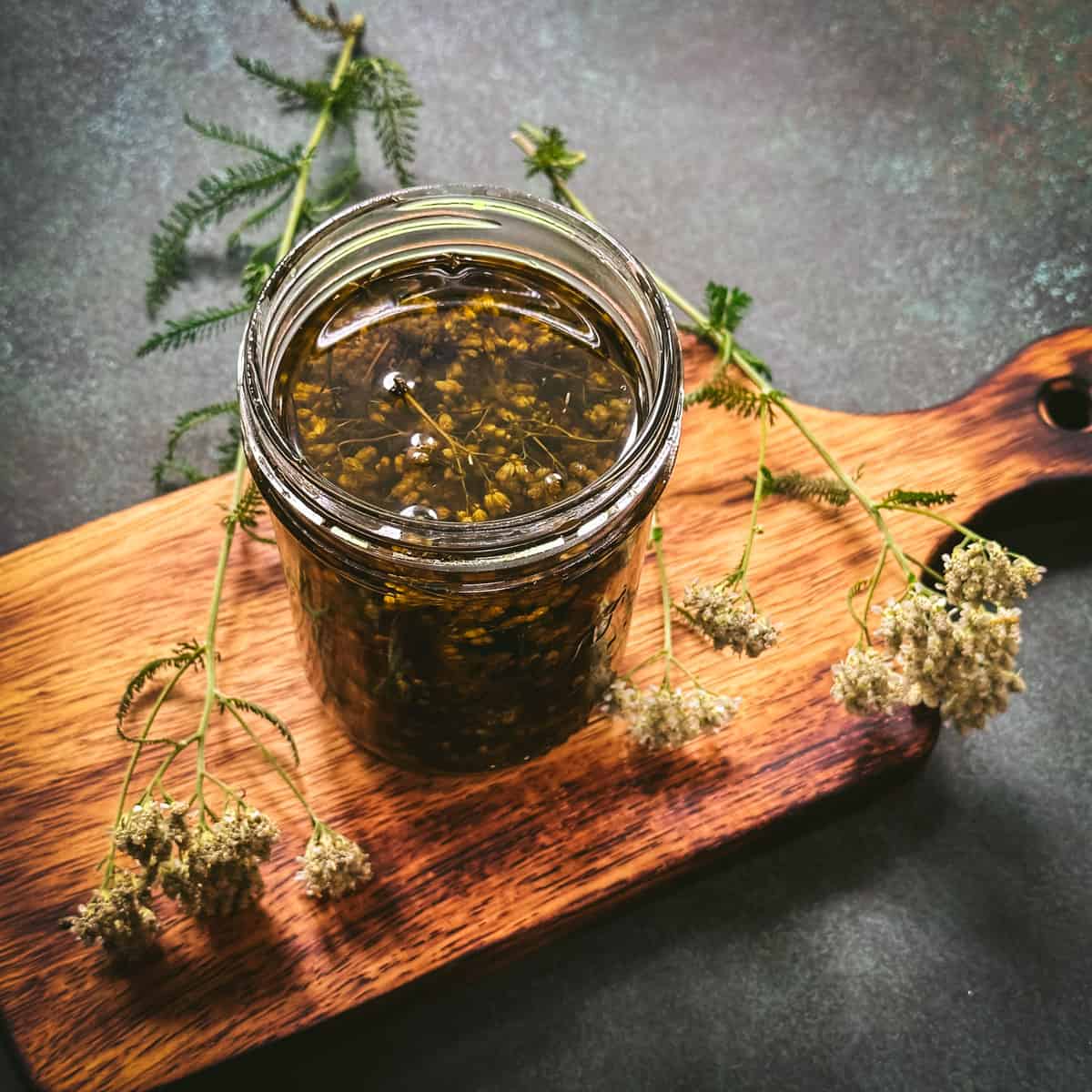
Once the herbs are dried, they can be infused into oils at any time of the year.
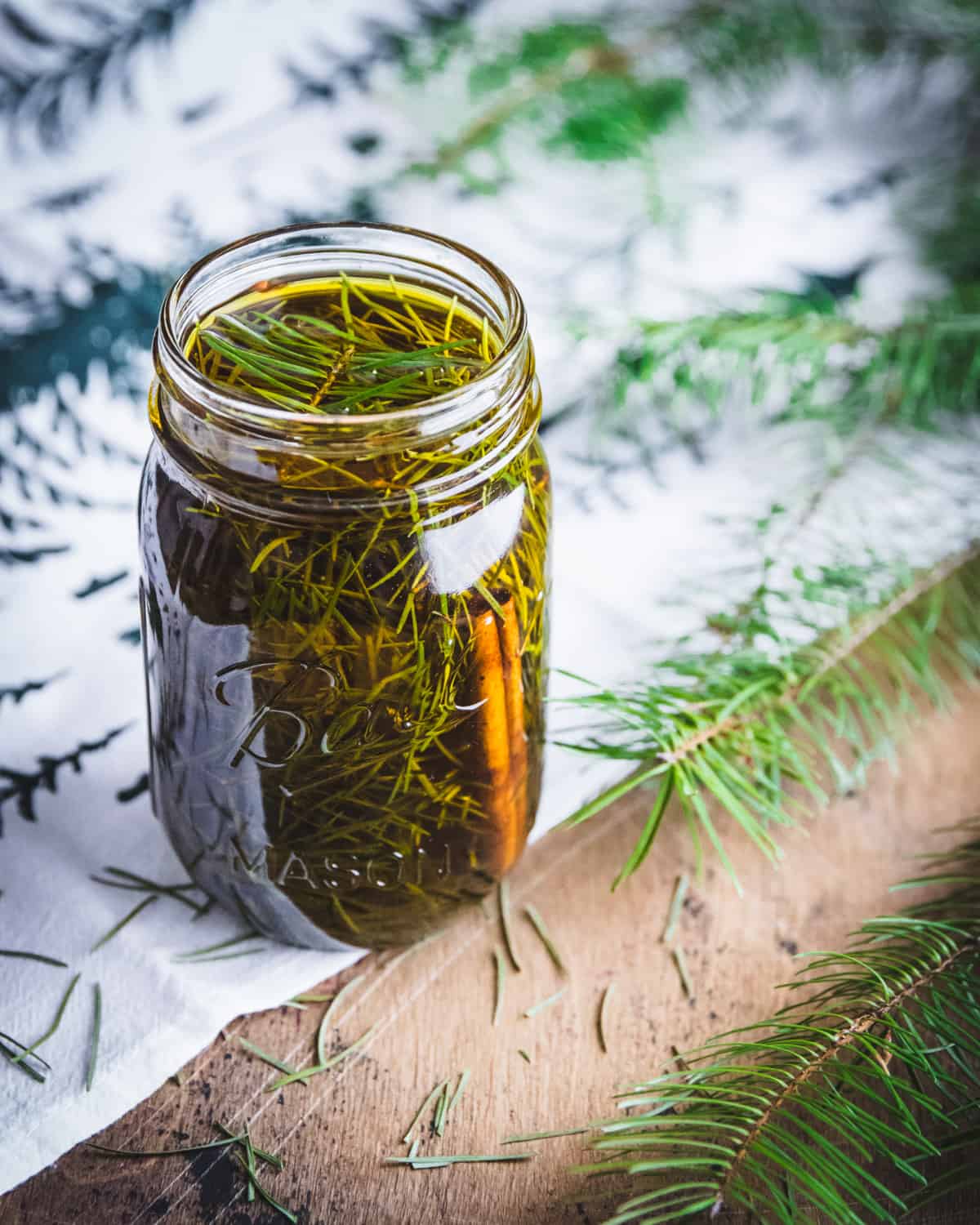
There are also wonderful plants and herbs year-round that work wonderfully for oil infusions, such as conifer needles and rose hips in fall and winter.
It is possible for herbal oils to go rancid and grow mold, and the best way to avoid that is to keep light, heat, and water away from the infusion.
Dried Herbs for Infused Oils
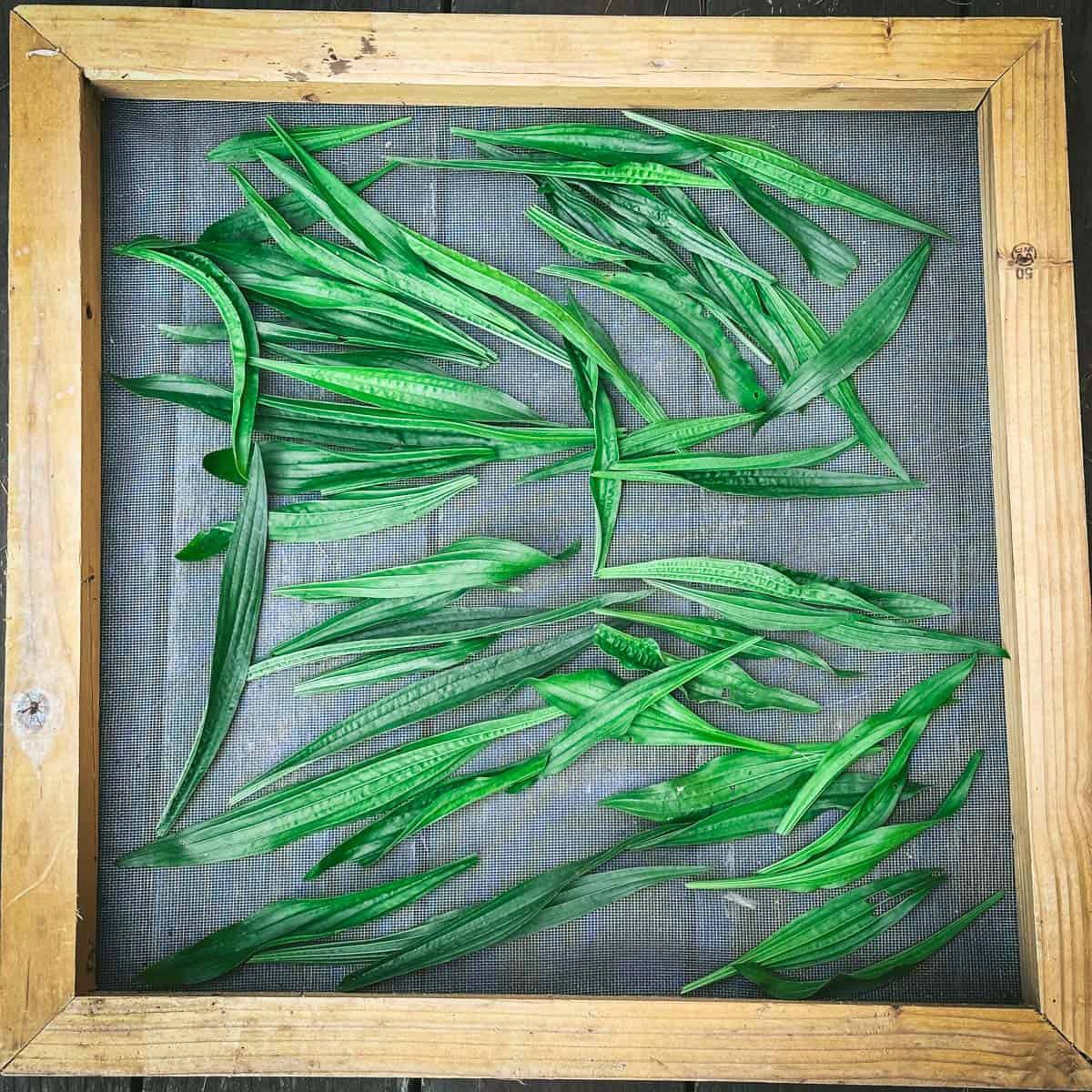
The first thing you need to make an infused oil is dried herbs. The herbs must be totally dry before you combine them with oil, or they can cause rancidity.
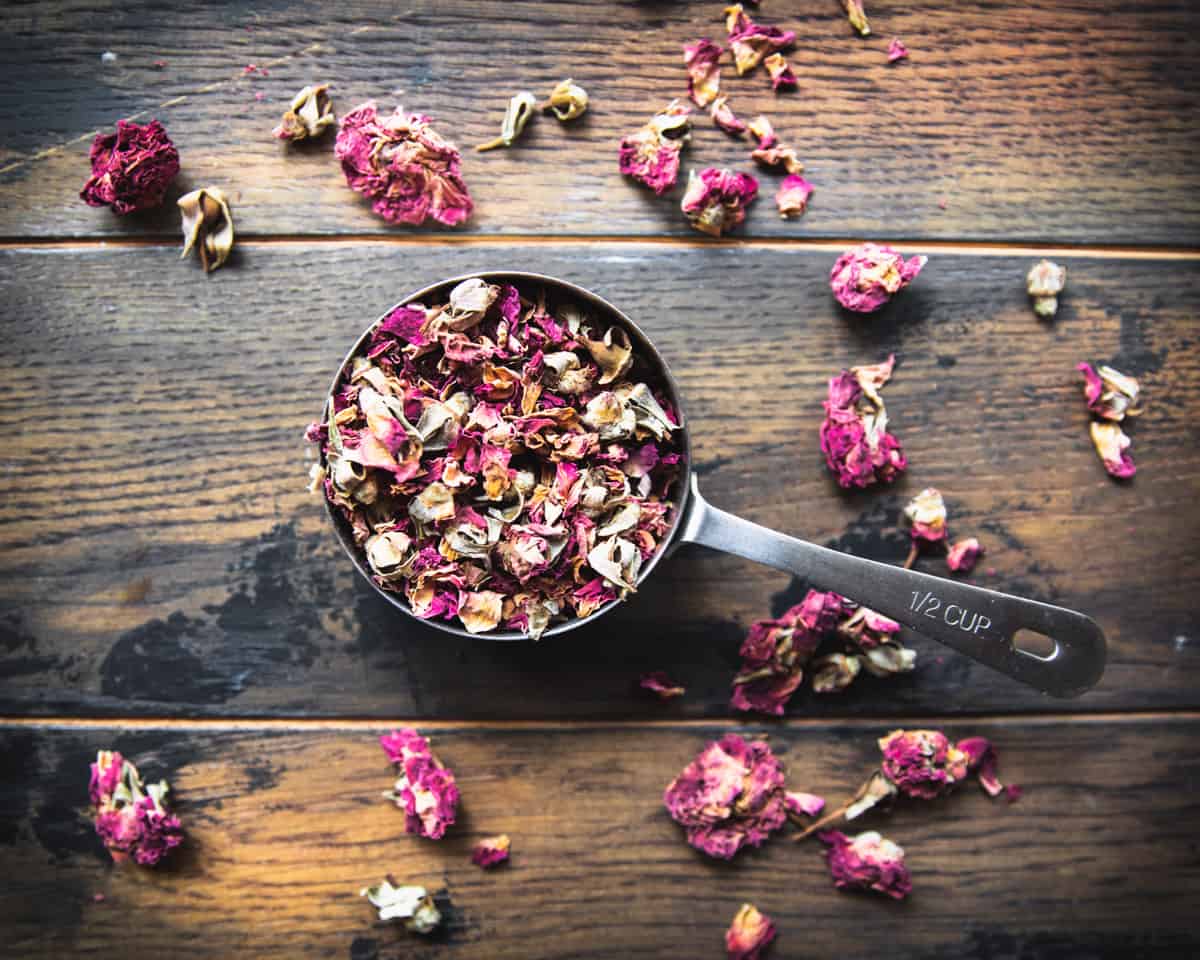
Many different types of herbs work well for making infused oils, especially lavender, rosemary, calendula, plantain, yarrow, comfrey, and mullein.
If you don’t already have your own dried herbs, Mountain Rose Herbs has a great selection of dried herbs to choose from.
Carrier Oils for Infused Oils
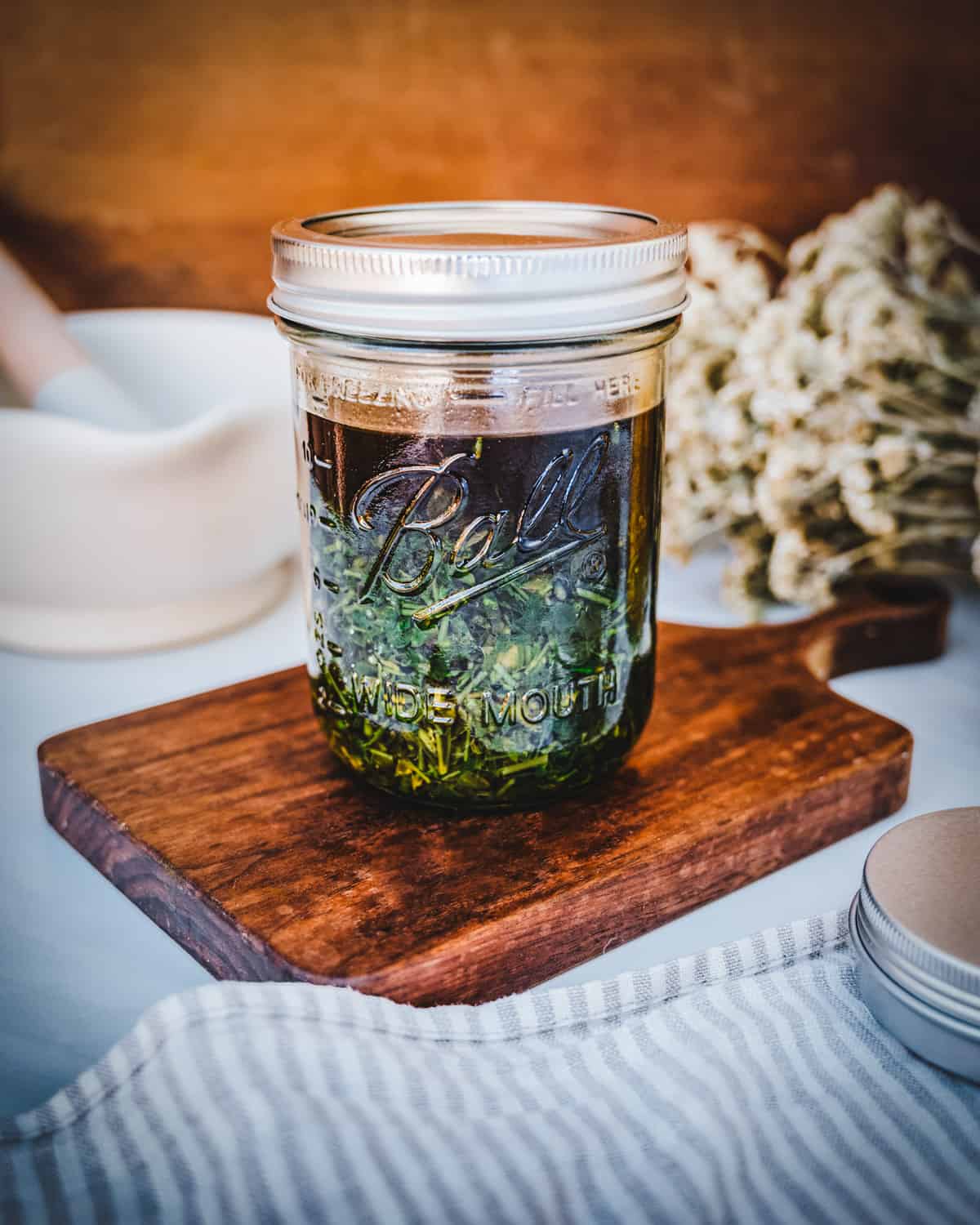
Then you will need to choose the oil that you want to use. I usually use a high quality, light olive oil, but there are many types of carrier oils that you can choose from.
For most skin applications, I usually use a blend of coconut, sweet almond, and olive oils. You can use any of the carrier oils listed in these ingredients interchangeably for the initial infusion.
The kind of oil that you use will depend on the final application and your own personal preference.
The amounts of dried herbs and carrier oils listed in my recipes are estimates and don’t need to be exact. You can make as much or as little infused oil as you like, so feel free to modify the amount.
As long as the oil blend covers whatever amount of dried flowers you decide to use, that is what matters!
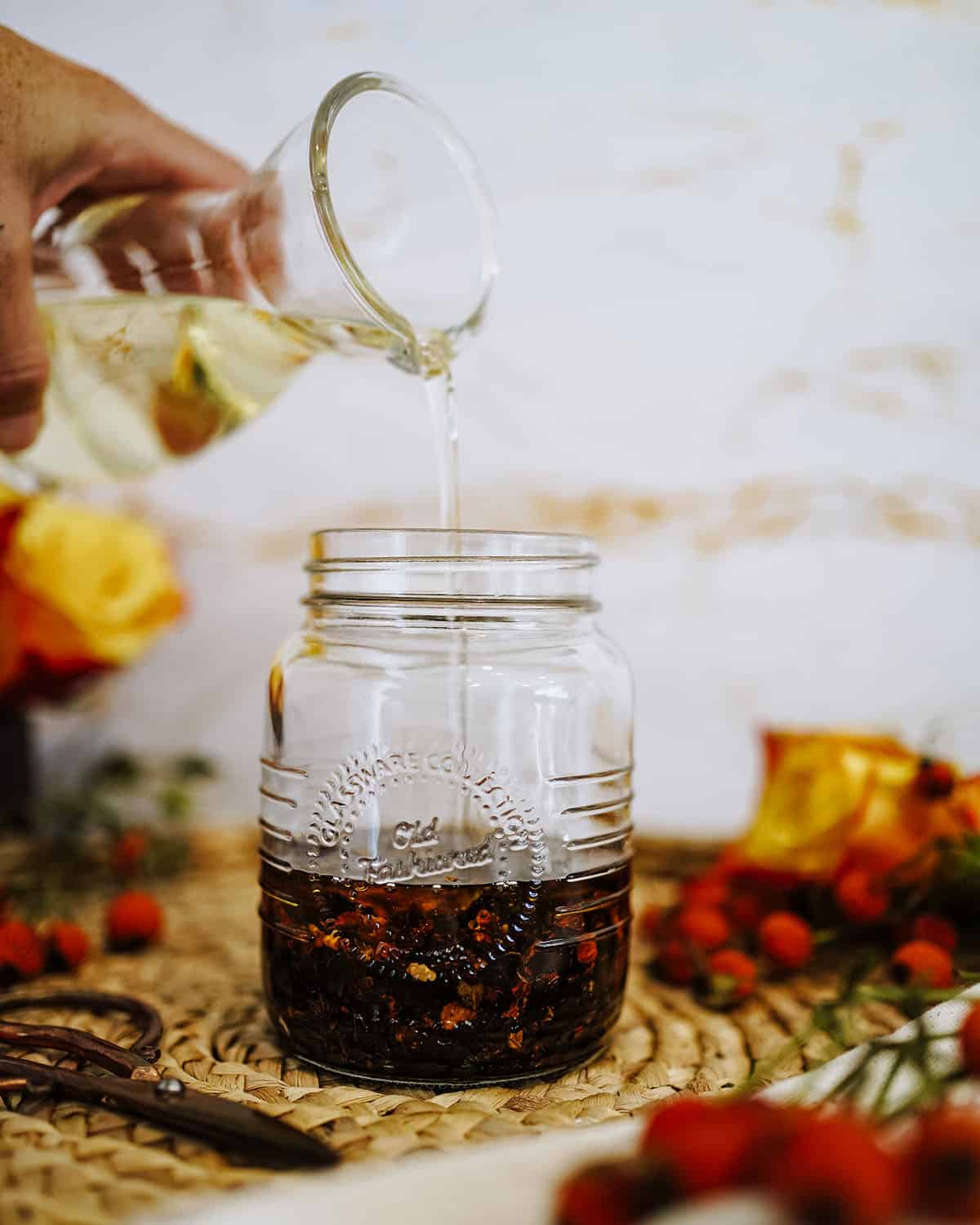
Once you have dried herbs and a carrier oil of choice, there are several ways of making infused herbal oils.
Cold Infusion Method
The cold infusion method is probably the easiest, but it does take the most time.
This method is the most effective and safe. It calls for dry herbs to be slowly infused in a cool, dark place for 4-6 weeks.
The main rule of thumb in a cold infusion is to use completely dry plant material because any moisture in the plants can cause spoilage or surface mold.
This method is best when using oils that don’t go rancid quickly, like coconut or jojoba, as exposure to sunlight can degrade some oils more quickly.
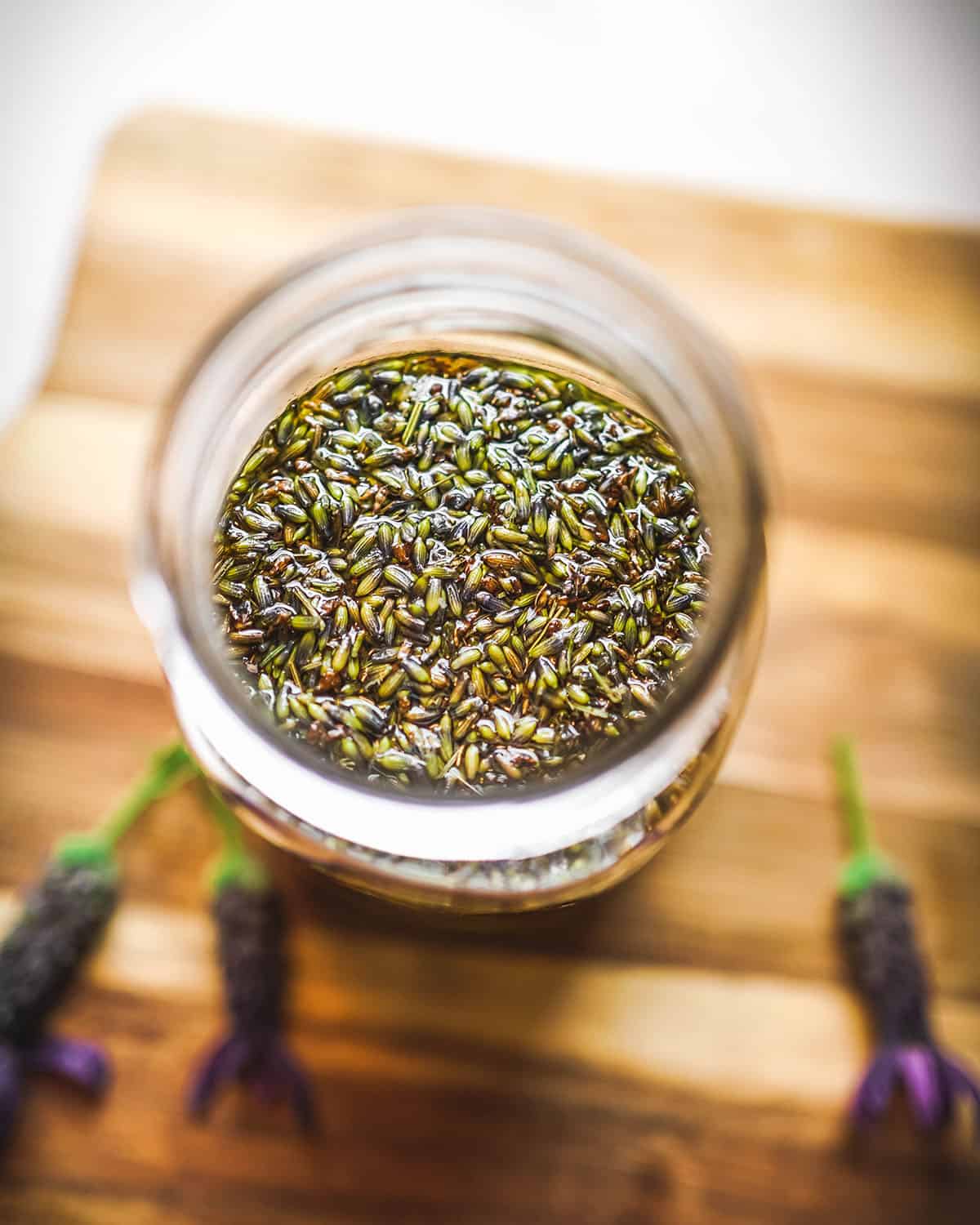
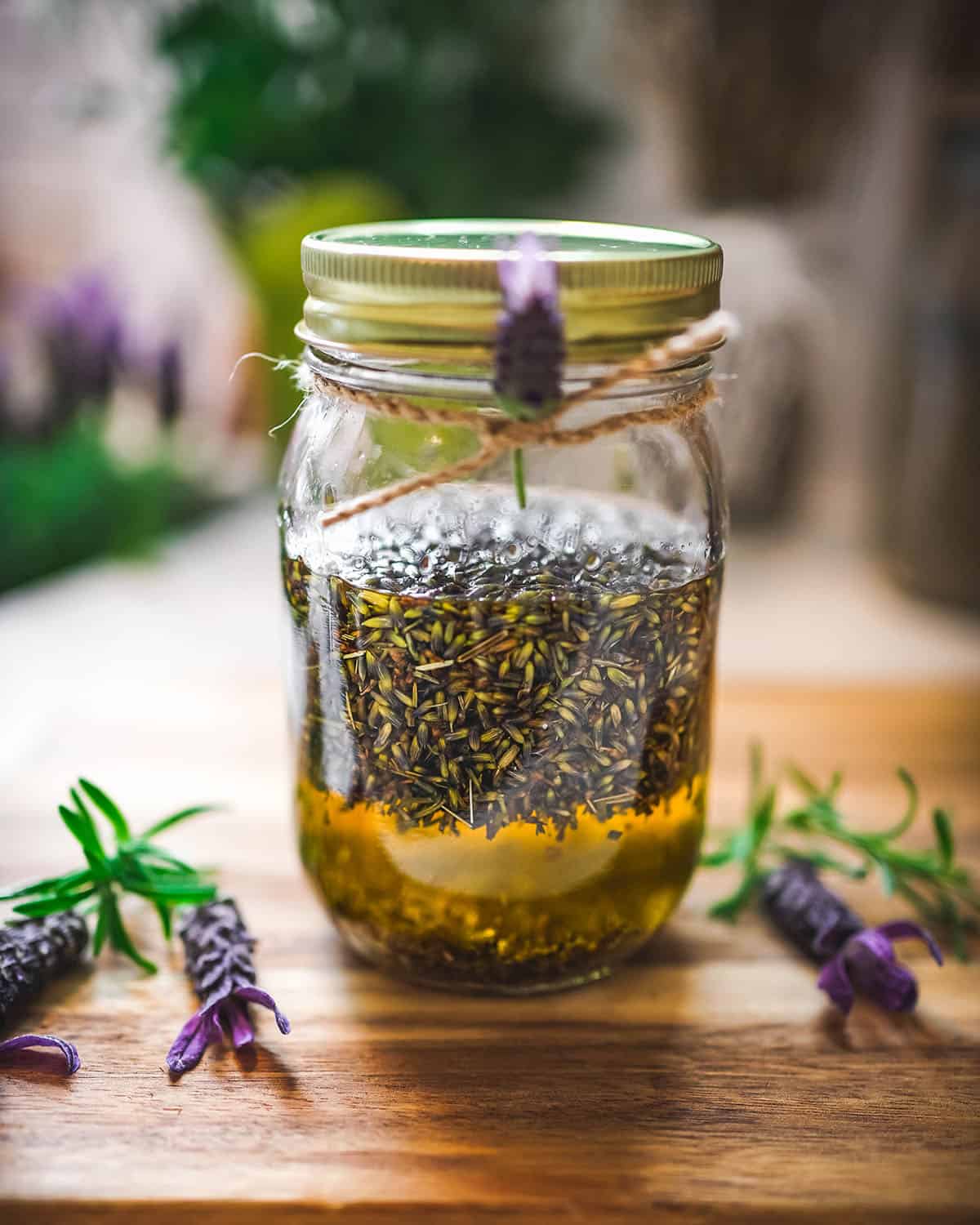
Simply put the dried herbs of your choice into a jar and cover them with oil.
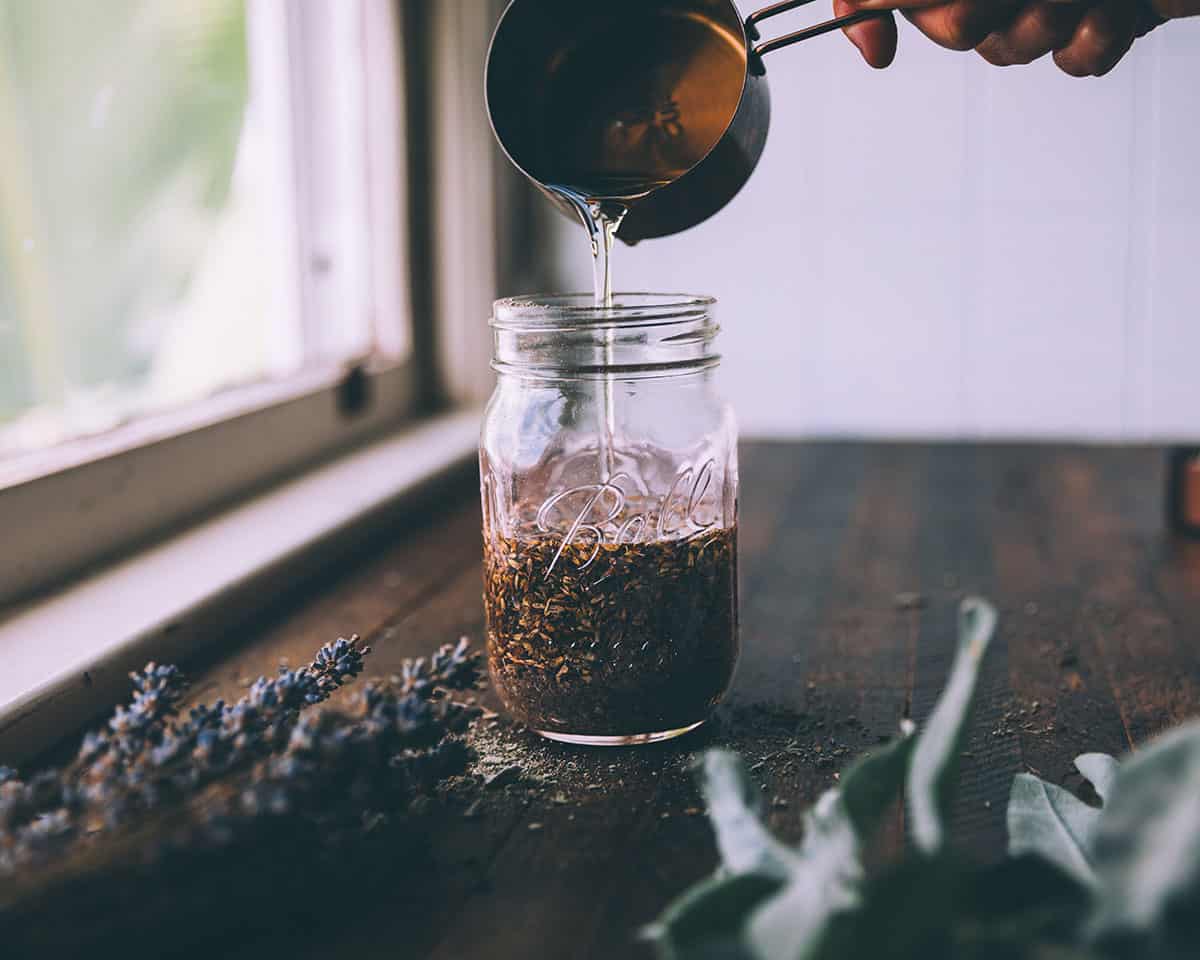
Stir the mixture gently with a spoon to get as many of the air bubbles out as possible.
When you feel it’s ready, simply strain the herbs from the oil.
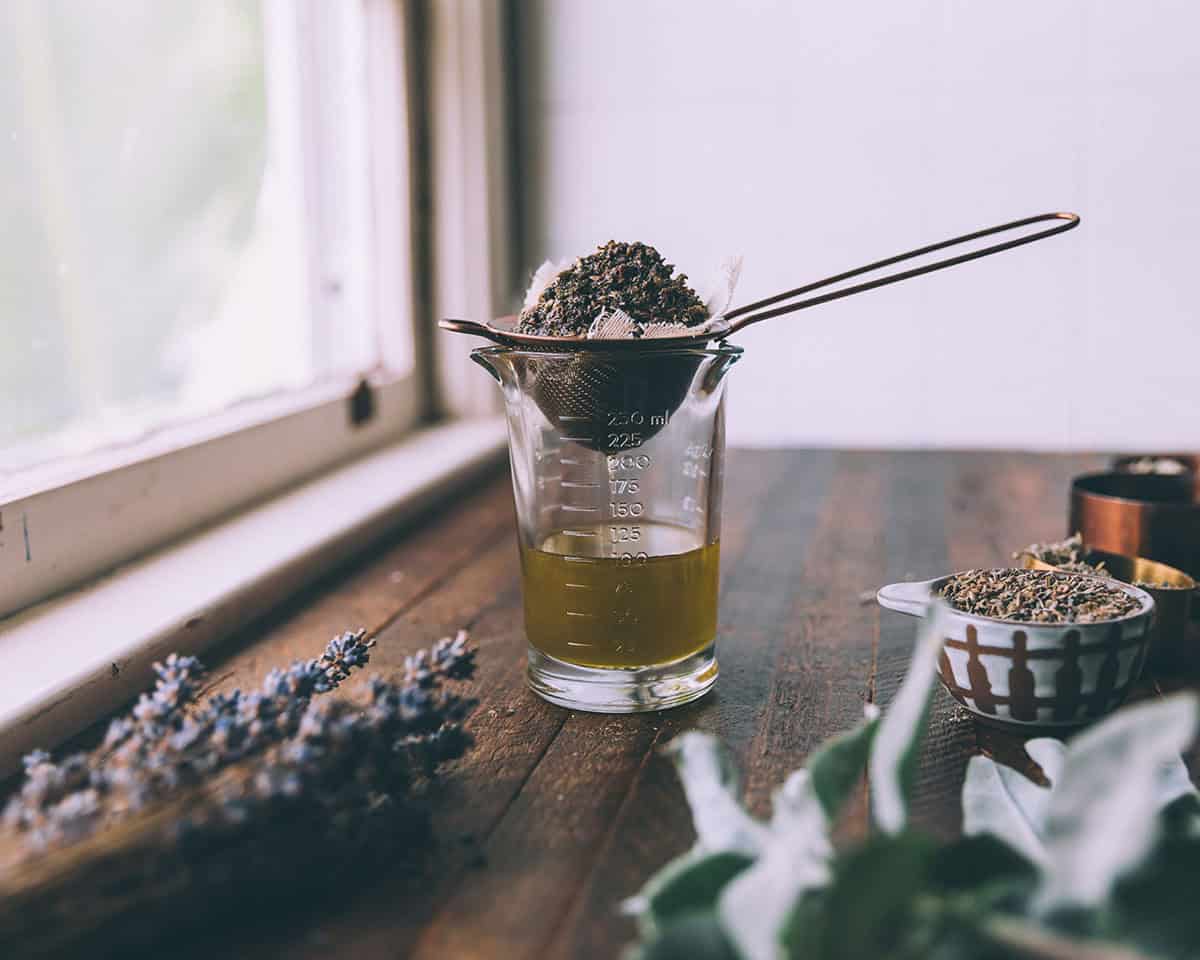
Cap with a lid and use it as soon as possible. Once oils have been infused they have a shorter shelf life, so I try to only make as much as I’ll use within a few months.
Any extra you might have should be stored in the refrigerator for future use.
Quick Heat Method
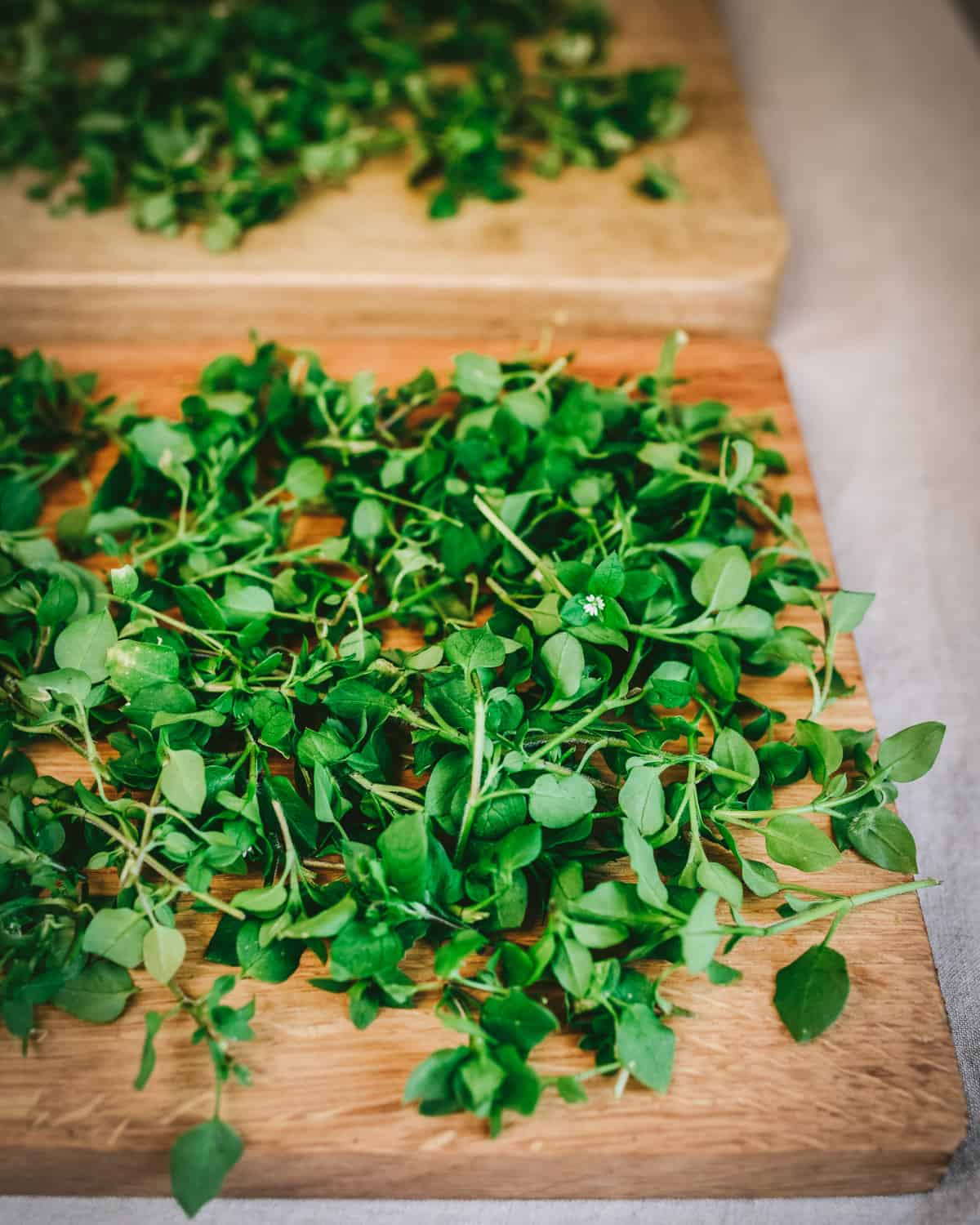
There are a few herbs and flowers that lose their potency when dried, so it is best to use them fresh or slightly wilt them. In that case, use the quick heat method.
This method works best for fresh or wilted herbs, such as St. John’s wort flowers, dandelion flowers, or chickweed.
It isn’t preferred for dried herbs because the heat can degrade the oils. However, it’s best for wilted flowers and herbs to avoid spoilage.
The easiest way to infuse oils with the quick-heat method is to warm them in a slow cooker on the lowest setting or by using a double boiler.
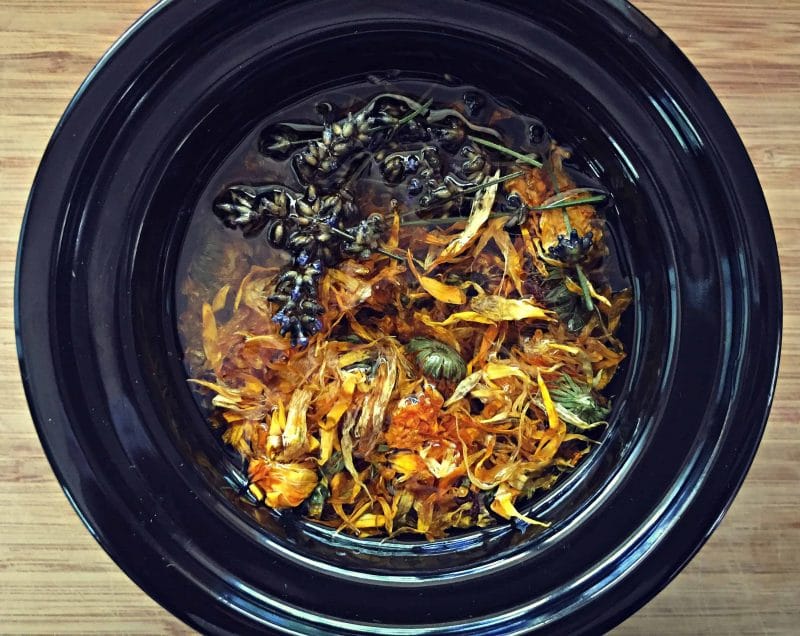
Keep the oil uncovered to allow evaporation, and heat for 12-24 hours. The oil shouldn’t be heated over 110 degrees Fahrenheit.
If you have a box-style dehydrator, it can also be used. It can fit many jars at once and has lower temperature settings, so there is no worry of overheating.
If you need the infused oil to be ready sooner than 4-6 weeks, you can use the heat method with dried herbs as well. Use the same process as described above, but it’s ok to cover the jar while heating.
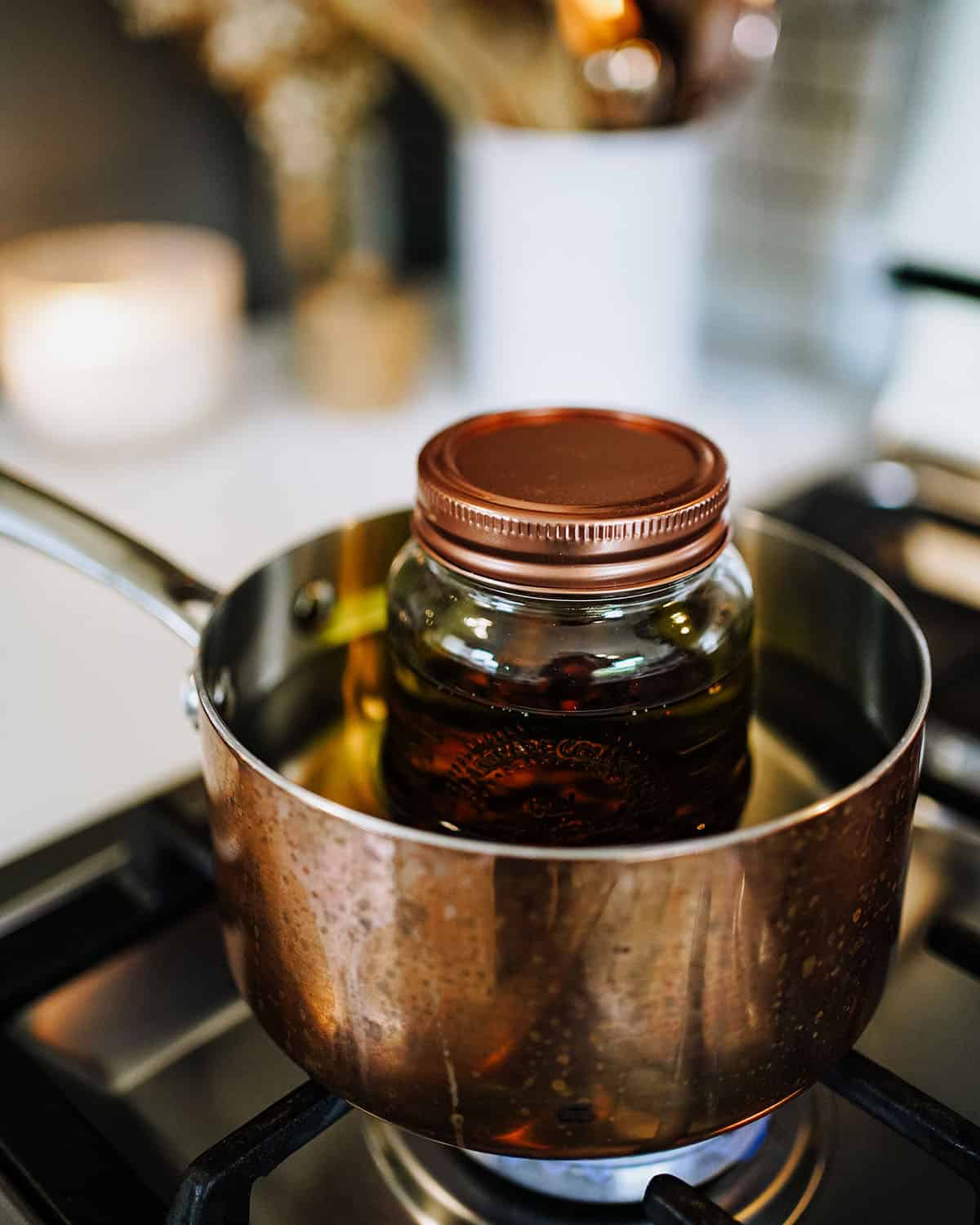
I like to do this and then let the oil sit for a week or two until I need to use it.
Note: The oil will be slightly degraded and will go rancid a little bit sooner, but not as quickly as if it were exposed to water or sunlight.
Solar Heat Method
Another way to infuse an herbal oil is to place it on a sunny windowsill for several weeks. This can be effective for certain oils with higher saturated fat content, like coconut oil.
However, sunlight considerably degrades many oils and causes them to go rancid much more quickly. I generally avoid this method due to the consequences of sun exposure.
Using Infused Herbal Oils
Once you have infused oil, the options of what to make are endless! Try making an herbal salve, there are so many that have wonderful properties for soothing skin.
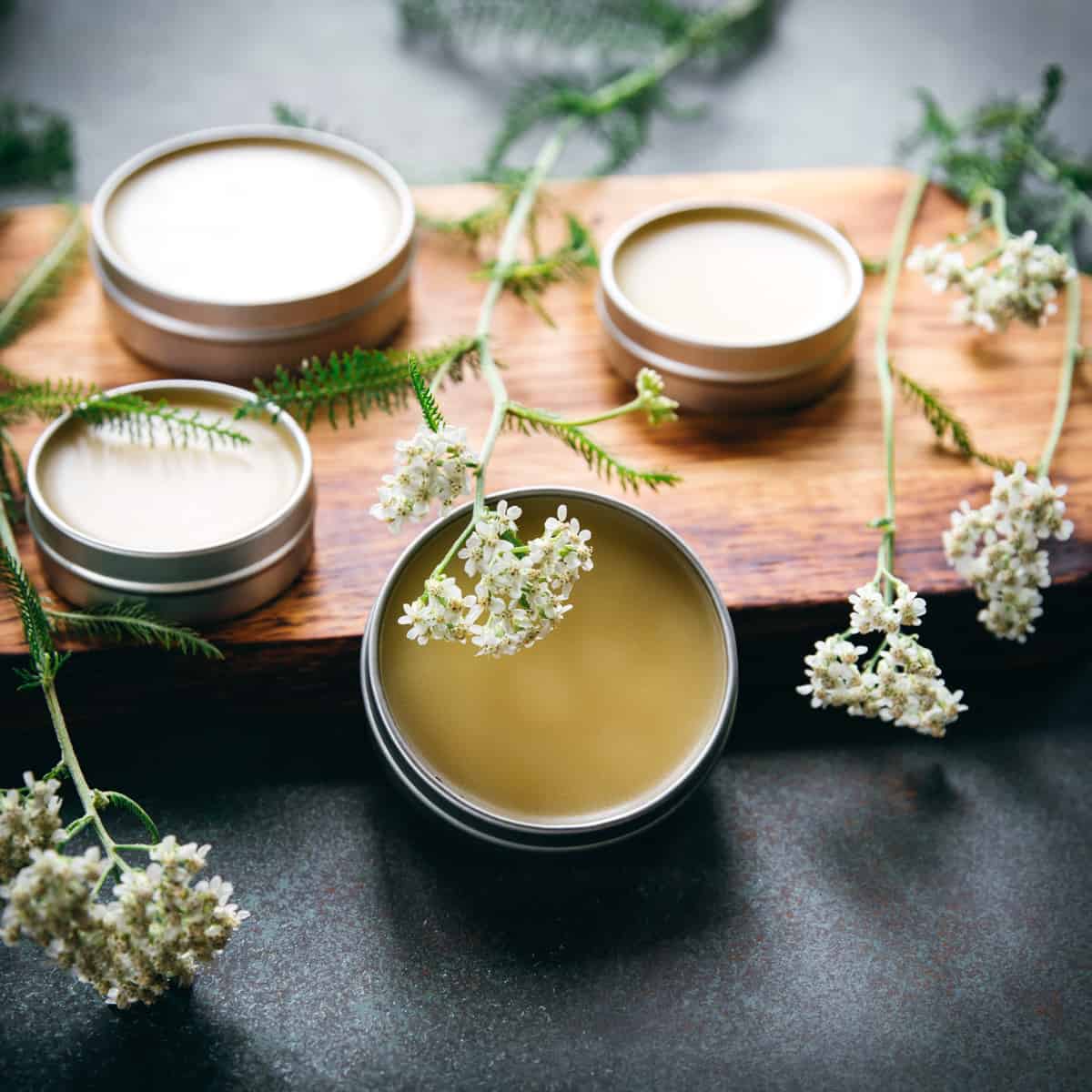
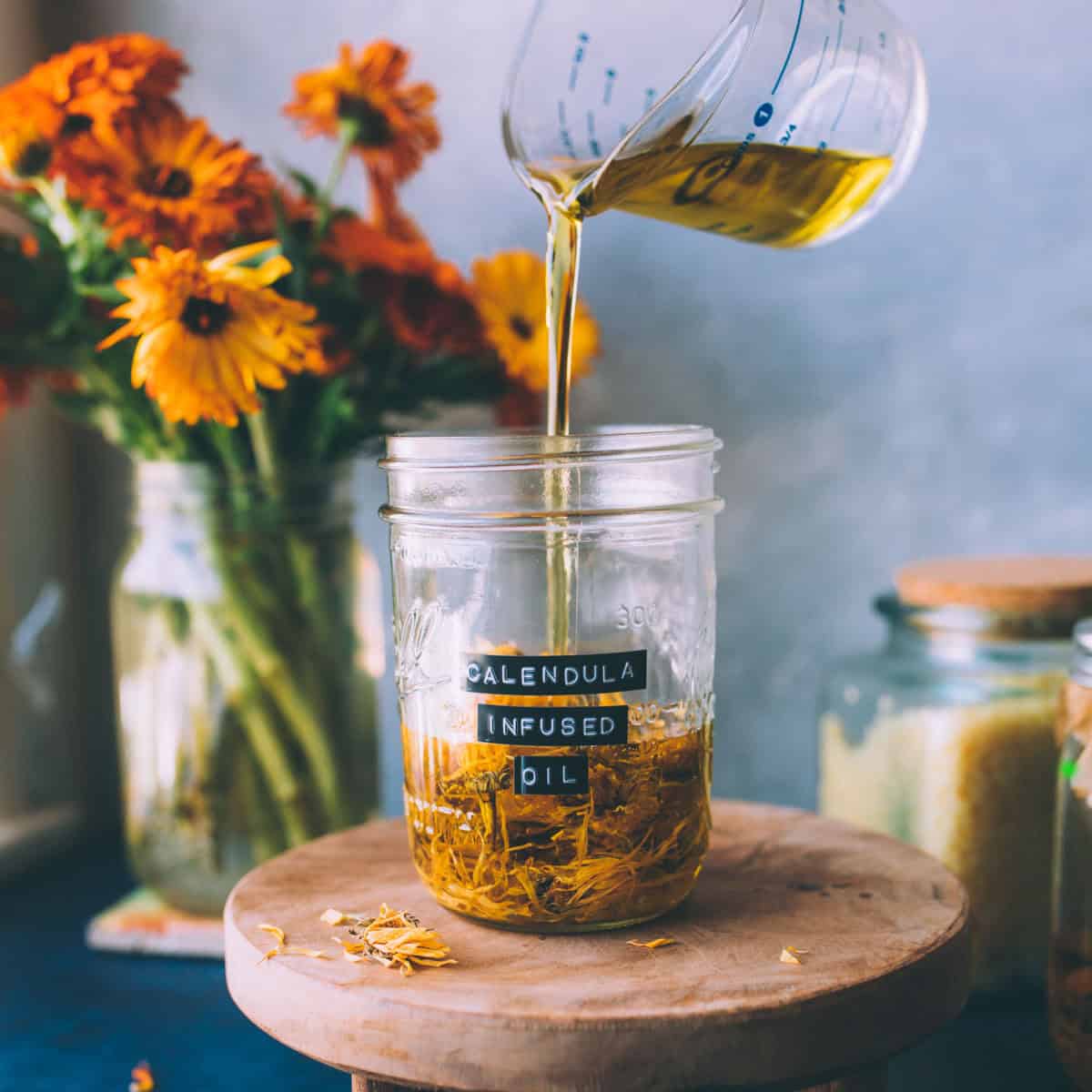
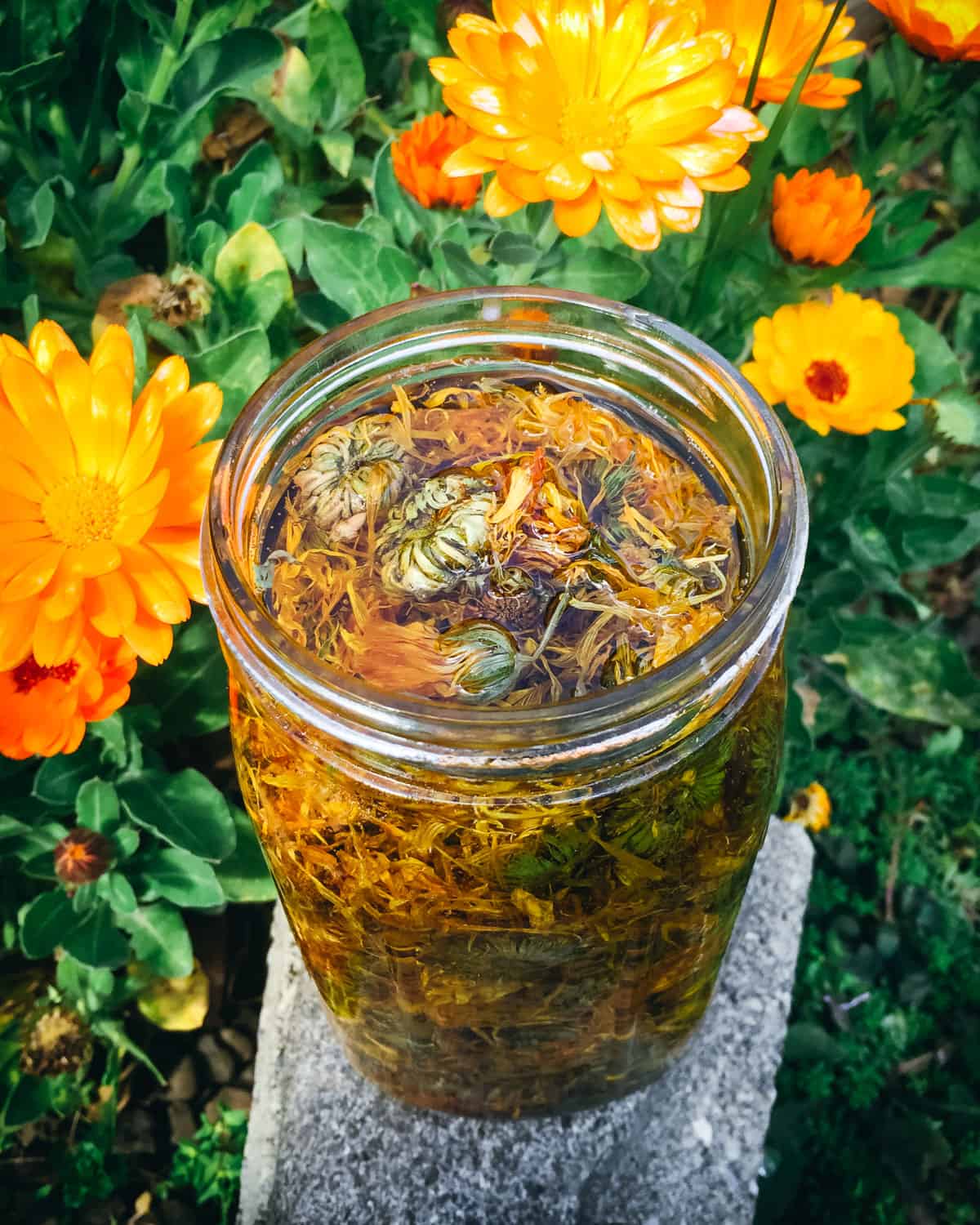
A simple infused oil can be great on its own, too. Calendula-infused oil has so many uses and has tons of skin-calming power as well.
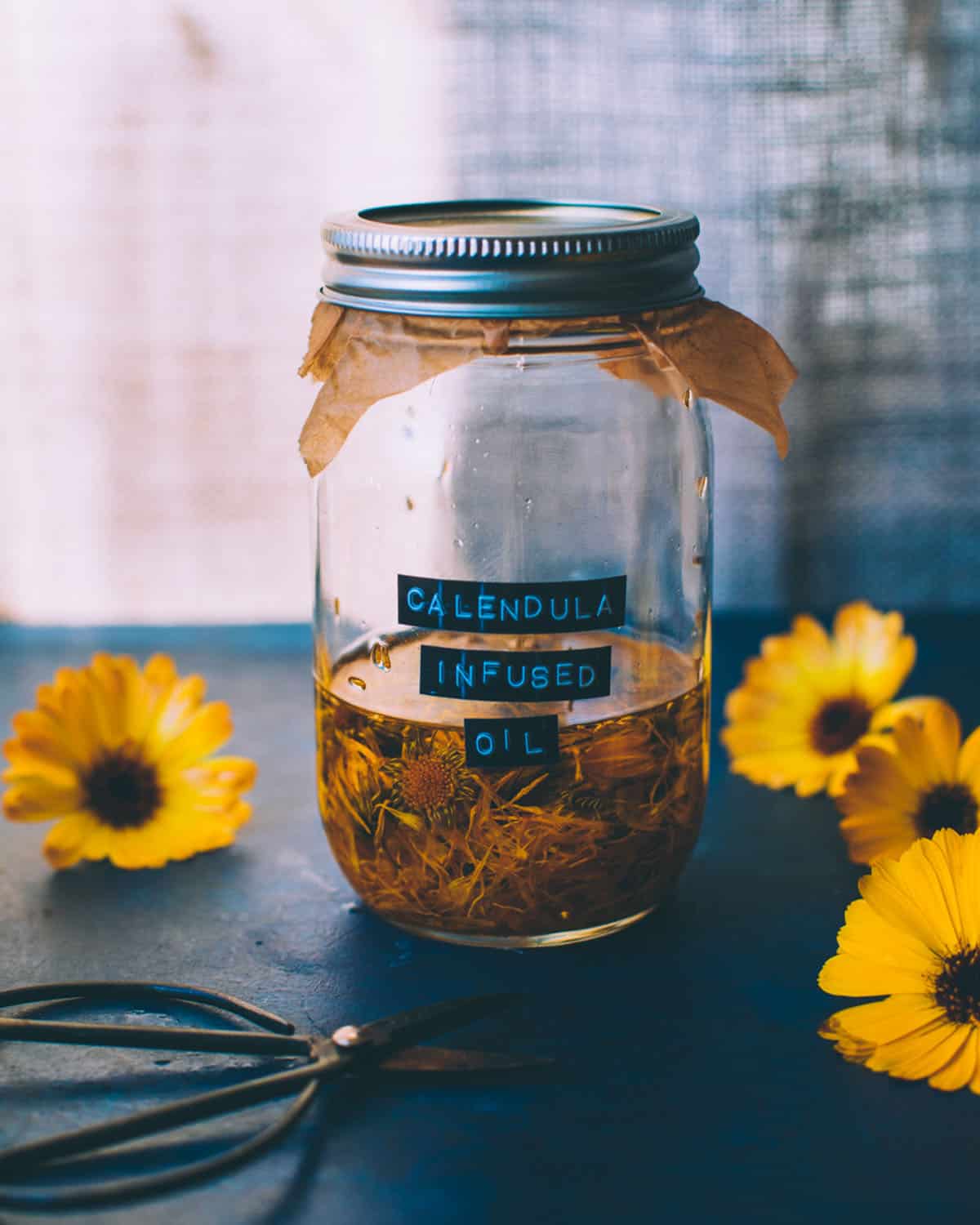
Herbal oil infusions are the first step to making skin creams, butters, salves, lotion bars, and more!
More Infused Oil Uses
- Pine Salve
- Wild Violet Soap
- Dandelion Lotion Bars
- Rosemary Mint Shampoo Bars
- Calendula Lip Balm
- Lavender Sage Deodorant
- Calendula Cream
- Yarrow Salve
Can you use fractionated coconut oil for infusion
Yes, that’s fine!
Can you infuse several herbs in one oil? I’m a newbie. Thank you for your help!
Hi Gaile. Yes, you can definitely do that!
Hello newbie here, and by newbie I mean I literally don’t know what I’m doing.
So I dried my herbs and put them in coconut oil. But after a few days the coconut oil hardened. Is that normal? Or do I need more than one carrier oil (more than just coconut oil). I hope someone can help.
That’s a great question and one I get asked a lot! I don’t use 100% coconut oil very often for this reason, and when I do I typically do the quick heat infusion method which will extract most of the compounds as the coconut oil is melted. I do use coconut oil as a portion of the oil blend frequently because it has a lot of benefits and is also very shelf-stable. I recommend melting it first before combining it with the other oils. In cool temps, you will see a bit of solidification, but the other oils should keep it mostly liquid as the herbs infuse. I do think that even totally solidified coconut oil will extract some of its properties, but it’s more effective if it’s melted. Hope that helps!
You need fractionated coconut oil that isn’t solid so it won’t harden.
Why do herbal infusion instructions never mention cleaning the herbs or sanitation before infusing? I know it’s preferable to use dried herbs, but from harvesting to infusing, how do we know there isn’t dirt residue, pollen, mold spores, etc. on the herbs that could cause skin problems, even if they are organic? We should be putting only the cleanest stuff on skin, especially delicate skin, especially if in bulk to last a while.
Good ol’ common sense I suppose ;)
I was thinking about the oil being in the sunlight, that you are supposed to let stand in the dark, because of the fact that the oil will go rancid.
When I do a sunlight infusion I always place my jar (with the herbs and oil of choice) in a paper bag then set on window sill. I have never yet had rancid oil using this method.
Hope this helps answer your question.
Yvonne
Hello,
Can i use coconut oil to infuse blackseed?
Dear Kay,
some tips I’ve learned for crockpot infusion:
As much room as the herbs take up in the jar, add that much oil and a little more. Even if the herbs float this is ok. Leave a little room for air! Some things expand with heat.
The jar-in-crockpot is a little like the double boil method, so I placed a small towel on the bottom of the crockpot to protect the glass jar from breaking. Maybe not necessary but some herbs are expensive so I take the precaution.
You fill the crockpot with hot/warm water enough to “bathe” the jars but not enough to cover the lids of the jars. We don’t want water in our infusions! Some people weight down the jars so that they don’t float. I don’t usually have that problem.
The warm setting is usually enough in that 200 degree range (but not higher than this to avoid boiling and cracking!) Put the lid on the crockpot. Leave it in for as long as it needs (some of my glycerites need 2 whole days.) Occasionally swirl the jars if it’s recommended for the herb you’re using. If the water level gets low from evaporation, you can add more warm water to the crock. Don’t let the crock dry completely out.
After the infusion process it’s recommended to let the jars cool a little and dry the outside completely. There will be some negative pressure when opening, but I strain with cheese cloth so it’s necessary or I burn myself.
Strain your infusion into your container of choice to store for the next part of your process. Some recommend dark blue or brown bottles/jars to protect from further light.
I hope this helps! Best wishes!
Ps. I love the lavender scrub idea. I save my cheesecloth strains for poultice for later.
I understand that blue bottles are not ideal. Brown bottles prevent much more protection from sunlight and, therefore, chemical breakdown.
Can calendula infused oil be replaced with calendula essential oil for making the salve? If so how much would I need to use?
No that will not work.
Thank you for the information sharing 😘
If the infused oils have a short shelf life, would adding vitamin e help?
Ive recently made a concoction with sage and glycerin.. just wondering how to keep it fresh i guess.
I found this article through your article about purple dead nettle. If I make an oil out of that, would I use all parts of the plant- stem, leaves and flowers?
Another way to make your infused oil is with the Magical Butter Machine. I got one this last year abd it is so easy to use and you can use it for making lots more than just oils.
HI! I was just wondering could i use coconut oil to infuse instead of these other oils you’ve mentioned?
I don’t see why not. I use coconut oil in my cannabis salve and it works great. Coconut oil has healing properties of its own.
What about grinding the calendula before infusing and use the already measured oils once they are infused? Leaving the calendula in the soap?
If you make a lot of oil use olive oil, it lasts much longer. I’ve use almond and grape seed and when I made in bulk my salves didn’t last as long. Nothing like rancid smelling chapstick. I love the rose scented ideas too! Alkanet is inexpensive and takes very little to get a beautiful hue!
. I am completely new to the life of natural living. So I have many of questions that I’m excited to ask. I have a couple batches of different types of powdered herb and I wanted to try the double boiler method 1st but I’m unsure of the ratio of oil to herbs, how long to let it cook for and what temperature does the water need to stay at. The same type of questions apply to the method of the mini crockpot using the powdered herbs
Love this! I infused lavender in grape seed oil to use for some facial care. After I strained the oil, I ran the lavender buds thru my food processor, then mixed it with some Epsom salts and some of my wonderfully scented oil to make a body scrub.
Ooooh! I like that idea for using the lavender buds afterward!
Wow that’s a great idea!!!
If infusing thru the long method, leaving it for weeks in the sun, how would that work w coconut oil? Is it still infusing if the coconut oil goes hard?
One more question, is hanging up herbs for days/weeks a good drying method?
Thanks
More info on oils, have several herbs growing in my yard . All info is great????
Hi
When infusing oils it always says to leave about an inch of oil at the top with the herbs completely covered. Mine always float to the top and kinda poke through the oil. Will that spoil the infusion? How do you keep the herb from floating to the top and poking through the oil?
If you are using herbs that are completely dry I wouldn’t worry about it.
Ive put calendula in a jar with oil now for 6 months – is this good or do I throw it?
If it is clear and not cloudy, it should be good. Does it smell rancid?
Can chamomile teabags be used to infuse oils?
This is great. I am so glad I discovered your site. Can’t wait to use my lavender today.
I love these instructions. Thanks for such an awesome blog
Hi! I am wondering about the Calendula infused oil for the diaper cream. How much lavender and how long should it sit in the calendula oil for it to be infused enough for the diaper ointment?
hi, you weren’t clear on the amounts of oil, and herbs ? Does it matter how much I use?
Nope, doesn’t matter :)
Can the herbs be used for anything afterwards,or do they have to be thrown out?
Hi,
I use would like to know after making herb olive oil where will I use this oil. Please can you let me know. Can I eat it or use in recipes.
Thanks.
While you could probably eat it depending on what herbs you use, that’s not really what it’s for and it probably wouldn’t taste very good! Herbal infused oils are the basis for salves, creams, lotions, and other topical products.
HI Colleen, I have another idea on how to do this fairly quickly, I tried it today and worked very well. I filled the jars as per your directions, fill w/ oil, and set the jars in some water in the crock pot on low, check the temp after an hour, and don;t let it get above 200F then turn it off. When it cools, its ready. Tomorrow I will make the salve. But it could be done as soon as this is finished. Thanks for the quick tips
how long did you let it sit in the crockpot
Okay I was able to read your instructions to see what I missed. So you 1st place the herbs in a jar and you cover them with a carrier oil 1 inch above the herbs. 2nd you set the jars in a crockpot filing it maybe half way with water? on the setting of low, for about an hour and not allowing the temperature to go over 200 degrees, 3rd once finished you strain the oil out and its ready for use?